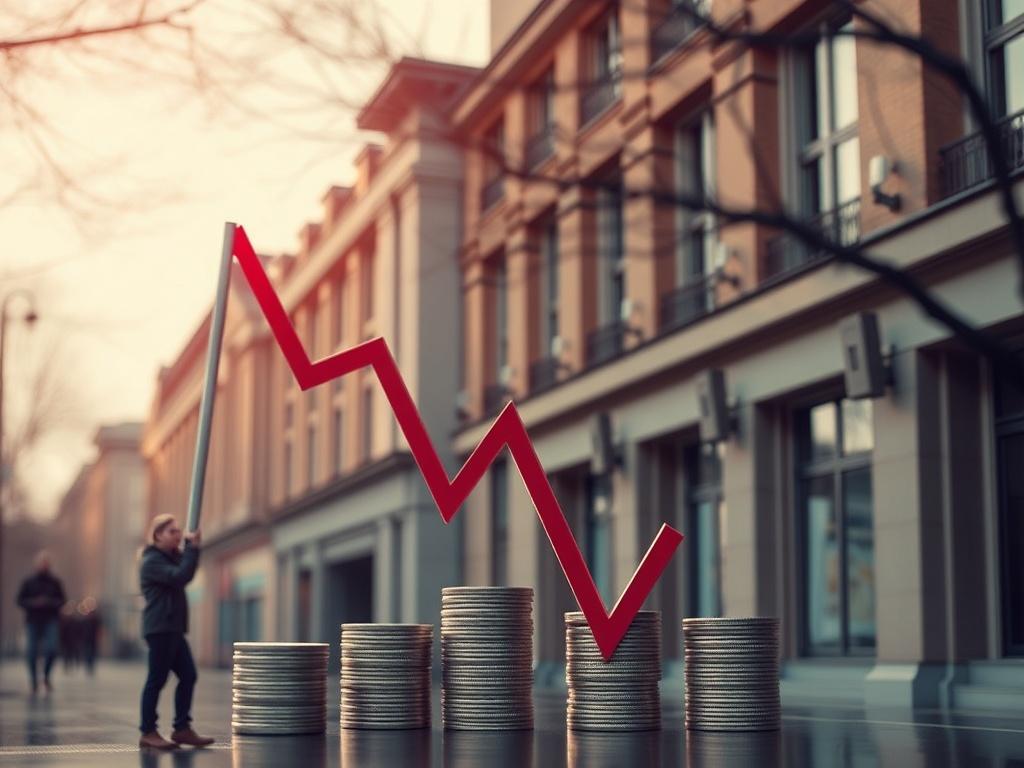
Words like “crisis” or “downturn” in the economy sound frightening, but behind them lie very specific mechanisms and human behaviors. In this article, I will talk about how to recognize the beginning of the worst times, what tools exist to soften the blows, and how to develop a survival strategy for your family and business. The material is based on verified definitions and examples from recent history, as well as personal experience working with entrepreneurs and financial planning.
What is an Economic Downturn and Why Does It Happen?
The term **recession** is often used in everyday speech as a synonym for an economic **”failure,”** but precise signs are important. It is not a single decline, but a systemic reduction in activity, visible in several indicators simultaneously: production, employment, household income, and consumer spending.
The reasons can vary. Sometimes it’s a financial shock: banks lose liquidity, loans become more expensive, investments freeze. In other cases, the blow is dealt by an external factor—a sharp drop in demand for exports or a global shock, like a pandemic. Mixed causes are more common: the economy reacts to a chain of events, and the effect intensifies on its own.
Key Drivers of Economic Downturns
One of the main causes is a decrease in aggregate demand. When consumers and businesses start saving, the economy loses momentum. *Investments are sensitive to expectations*, and if confidence falls, projects are postponed.
Another factor is credit bubbles and overheating. When assets rapidly increase in price, debt obligations are created, which, when prices fall, become a problem for banks and borrowers. This is already a classic scheme of a financial crisis.
How a Downturn is Recognized: Indicators and Methods
Professionals do not rely on a single number. They look at a set of indicators and their dynamics over time. *A decline in GDP for two consecutive quarters is often mentioned as a criterion*, but this is only a rough indicator.
There are also “leading” indicators: industrial production, business surveys, demand for June contracts, and the level of orders from suppliers. Financial market indicators are also important: government bond yields, credit spreads, and risk prices.
Table: Key Indicators and What They Signal
| Indicator | What it Shows | Signal of a Possible Downturn |
|---|---|---|
| GDP | Total volume of production and services | Prolonged decline in real GDP |
| Industrial Production | Production dynamics in the real sector | A sharp drop is considered an early signal |
| Unemployment Rate | State of the labor market | Rise in unemployment following a drop in activity |
| Business Activity Indices (PMI) | Assessment by supply and order managers | Values below 50 indicate contraction |
Historical Examples: Lessons from the Past
In 2008–2009, the global economy experienced a financial collapse that began in the US mortgage lending sector. This led to an extensive credit crunch, bankruptcies, and a sharp reduction in investments. The opinion that the crisis was **”American”** and would not affect others quickly dissipated.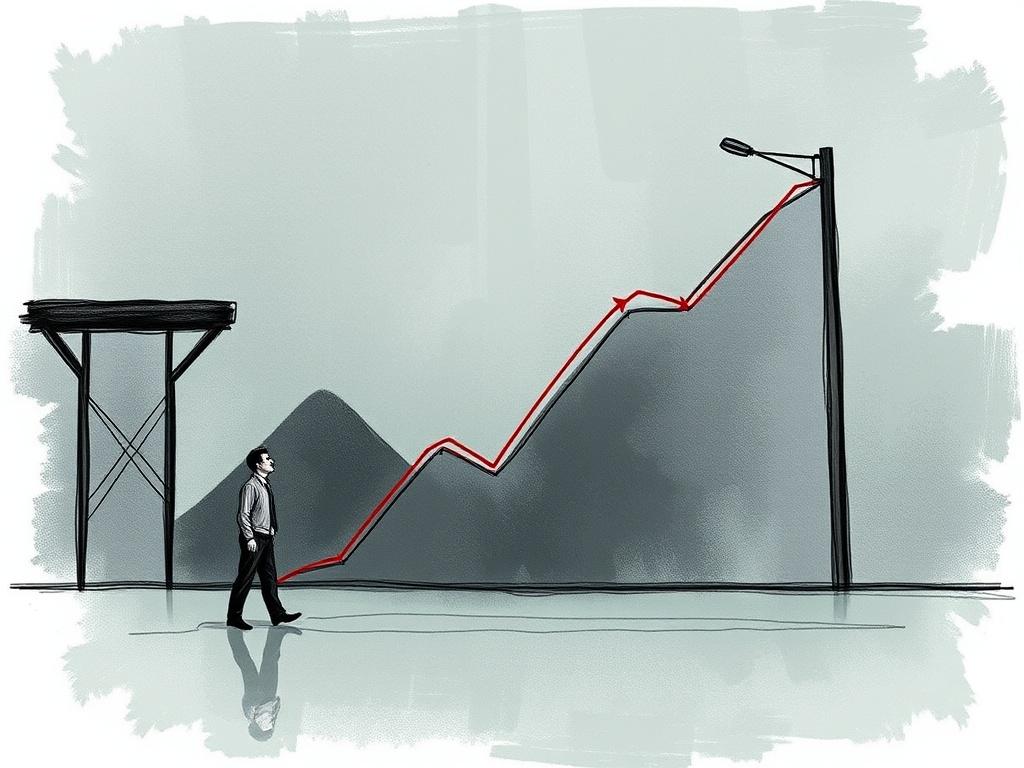
In 2020, the pandemic demonstrated a different mechanism: a shock to both supply and demand simultaneously. Governments imposed restrictions, logistics chains broke down, and consumers restructured their spending. The monetary and fiscal policy response was massive, and this helped soften the blow, but the consequences were distributed unevenly.
What These Examples Teach Us
First, it’s important to distinguish the nature of the shock. Financial crises require stabilization of banks and capital, while supply shocks require support for producers and logistics. Second, the timing of the response is critical: delay increases losses. Finally, the consequences remain for a long time: recovery can be slow, and some sectors change forever.
Social and Human Aspects of an Economic Downturn
Behind the numbers, there are always people. Rising unemployment causes stress, worsens health, and reduces trust in each other. *Prolonged periods of low income reshape family behavior*: major purchases are postponed, fewer children are born, and educational plans change.
Social networks and growing inequality exacerbate the perception of a crisis. When part of society remains protected while another part experiences difficulties, it increases tension and causes political instability.
Why Some Groups Are Vulnerable
Young people and beginning entrepreneurs often work in sectors with low protection. Part-time employment and freelancing seem flexible, but when demand falls, they are the first to be left without means. Elderly people depend on savings and fixed incomes, which depreciate during an economic downturn.
Government social security programs play a key role in stabilizing demand. The effectiveness of such measures depends on the speed of implementation and the precise targeting of assistance.
Impact on Business: Survival and Adaptation Strategies
Companies react differently to worsening conditions. Some cut costs, others look for new markets. *The best examples are those who use the downturn as a chance to revise their model and optimize processes*.
It is important to distinguish between short-term measures and long-term strategies. Cost reduction can buy time, but systemic changes—digitalization, diversification of suppliers, strengthening customer relationships—create advantages after recovery.
Practical Steps for Small and Medium Businesses
First, calculate several scenarios, from mild to deep. This will help understand which expenses are critical. Second, strengthen accounts receivable management and maintain liquidity. Third, look for partners and sales channels that are more resilient to shocks.
- Optimize inventory and ensure fast stock rotation.
- Digital tools for customer interaction and automation.
- Flexible contracts and redistribution of resources within the company.
Policy Measures: What Can the State Do?
In response to a downturn, authorities use two main tools: fiscal and monetary policy. *Fiscal measures include direct transfers, tax holidays, and investments in infrastructure*. Monetary policy reduces the cost of borrowing and supports credit flows.
It is important to act in a coordinated manner and consider structural problems. A too rapid return to tight policy can stifle recovery, while overly prolonged support can lead to inflationary risks or market distortions.
Examples of Effective Measures
During the pandemic, many countries used direct payments to households and wage support, which helped maintain purchasing power. Investments in healthcare and digital infrastructure not only softened the shock but also created a platform for future growth.
Personal Financial Strategy for an Economic Downturn
It is important for people to understand that financial security is built in advance. *Creating a safety net equates to peace of mind during difficult months*. The standard recommendation is to have a reserve for 3–6 months of expenses, but in times of instability, it is worth increasing it to nine or twelve months.
In addition to cash reserves, it is useful to review debt: fix loans with variable rates and convert them to more predictable terms where possible. Similarly, it is worth evaluating the investment portfolio: high volatility requires diversification and discipline.
Practical Advice for Households
First, identify mandatory and variable expenses. Second, check insurance policies and payment terms. Third, if possible, strengthen your skills and education—this is an investment in your resilience in the labor market.
Forecasting and Models: Is It Possible to Predict a Downturn?
The economy is difficult to predict with high accuracy, but the probability of events can be assessed. Models use a multitude of data: macroeconomic indicators, surveys, financial indices, and geopolitical factors. *The more information and scenarios—the better the forecasts*, but uncertainty always remains.
Analysts often work with ranges and probabilities, not exact dates. This helps prepare for several possible developments and reduce the risk of a sudden shock.
Early Warning Indicators
Useful signals include: a sharp deterioration in corporate balance sheets, an increase in loan default rates, a drop in orders in key industries, as well as significant fluctuations in currency and debt markets. It makes sense to monitor these signs for those who manage capital and plan investments.
International Context: How Global Links Change Local Risks
Globalization has strengthened interconnections: shocks in one part of the world spread quickly. This has both pros and cons. On the one hand, market diversification helps smooth out local downturns. On the other hand, dependence on supply chains increases vulnerability.
Geopolitical events and trade wars create additional risks. Policies of import substitution and reorientation of supply chains are a response to such challenges, but they require time and investment.
How Not to Get Trapped by Interconnectedness
Businesses should assess risks along the entire value chain: from raw material suppliers to end markets. Strategies include creating alternative suppliers, localizing critical processes, and insuring logistical risks.
Psychology and Communication During a Downturn
A crisis is not just about numbers, but also about perception. Managing expectations and communicating transparently with employees, clients, and partners is one way to reduce panic reactions. *Clear and honest communication builds trust and helps the team act in a coordinated manner*.
It is important for leaders to show a plan of action and real steps, not just offer reassurance. People appreciate specifics: what resources are available, how expenses will be reduced, and what support measures are accessible.
Personal Experience: How I Saw Crises from the Inside
In 2009, I had to work with several small companies for whom the sudden credit crunch became a serious test. I saw how those who quickly recalculated budgets and reconfigured sales channels survived and later grew stronger.
In 2020, helping clients transition online was critical. Those who had previously treated digital channels formally quickly rebuilt their processes and managed to retain customers. These examples taught me one thing: flexibility and rapid adaptation mean more than trying to preserve old schemes at any cost.
What to Expect After the Downturn: Recovery and New Realities
Recovery is not just a return to previous indicators. Structural change often occurs: new leaders emerge, demand shifts, and technological progress accelerates. *Some industries disappear, others transform and grow faster*.
It is useful to prepare for the post-downturn world: develop new competencies, look for niches, and not be afraid to change business models. Those who know how to learn during periods of instability gain an advantage when exiting the crisis.
Investing After a Downturn
Opportunities open up for investors: asset prices sometimes turn out to be too low relative to their fundamental value. However, it is important to maintain discipline and not give in to emotions. A balanced approach and diversification usually work better than trying to catch the **”perfect bottom.”**
Practical Guide: Steps for a Worsening Economic Situation
Create an action plan—personal and for business. It should include response options for three scenarios: mild, moderate, and deep downturn. For each scenario, prescribe specific measures and responsible persons.
- Create and maintain a financial safety net.
- Optimize regular expenses and review contractual obligations.
- Invest in skills and technologies that increase resilience.
- Develop a communication plan for clients and employees.
Where to Find Additional Information
It is useful to track analytical reviews from international organizations and national statistical services. This provides a picture of global trends and local specifics. Below are several verified resources for regular monitoring:
- International Monetary Fund (IMF);
- World Bank;
- National Bureau of Economic Research (NBER);
- Federal State Statistics Service of Russia (Rosstat).
“Recession — is a significant decline in economic activity that spreads across the economy and lasts more than a few months.” — a formulation used by experts to describe the phenomenon.
How to Maintain Common Sense?
Downturns have happened and will happen. They are part of the economic cycle, meaning they are predictable in a broad sense. This is not a reason for panic, but a signal for action: revise strategies, strengthen financial resilience, and learn to adapt.
By showing care for people and making thoughtful decisions, one can not only survive difficult times but also emerge stronger. Practice and attention to detail are often more important than grand theories: small but timely steps yield results faster than waiting for the “perfect” recipe.