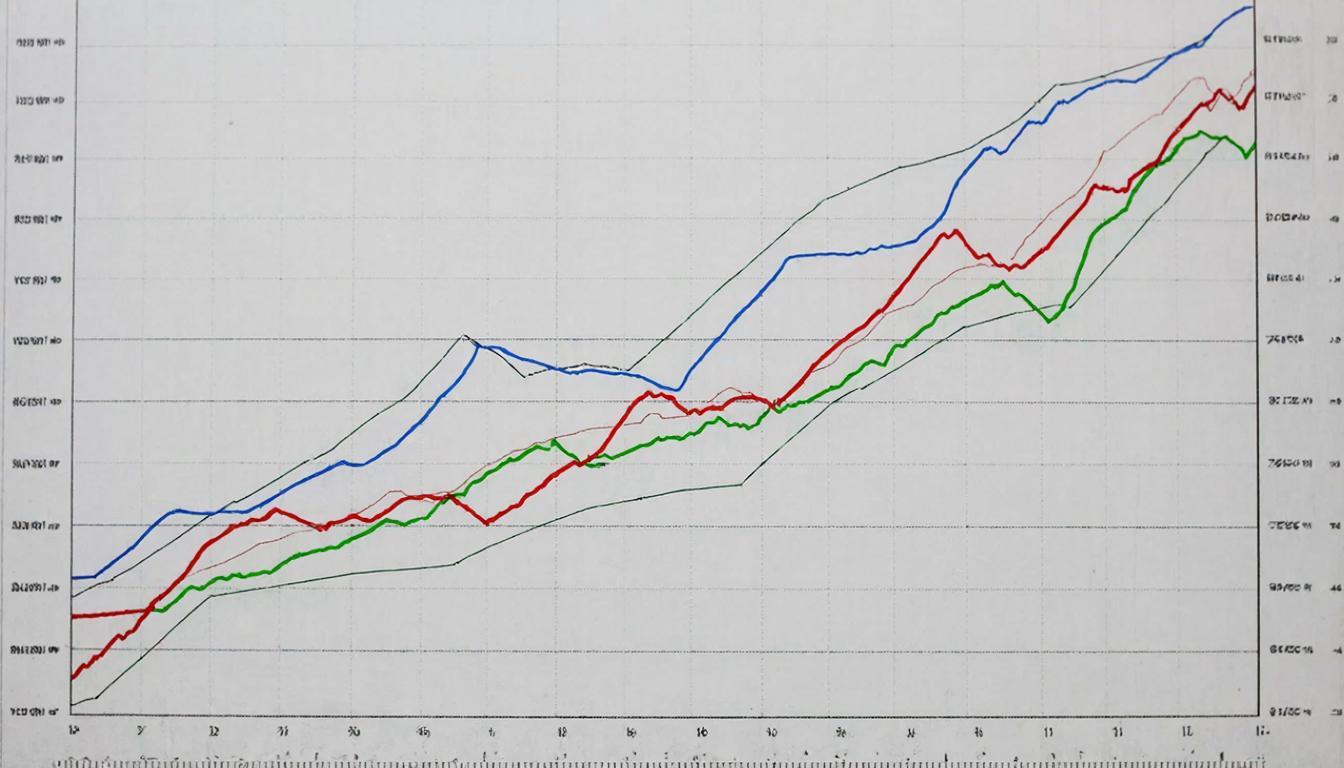
A Strategic Decision is a high-level managerial decision oriented toward the future, which determines the overall development of an organization, its mission, and long-term goals.
They are characterized by high complexity, uncertainty, significant resource expenditure, and have a long-term impact on the entire company, unlike operational or tactical decisions.
Architecture of the Future: What Determines the Quality of Strategic Decisions
At the heart of the long-term prosperity of any organization or investment portfolio lies not chance, but the quality of strategic decisions, serving as the foundation for sustainable development. This concept extends far beyond simply choosing among alternatives, representing a complex result of analytical work, insight, and managerial will. Understanding what strategic decisions mean is the first step toward recognizing their role as the primary lever for influencing the future. This article explores the multifaceted nature of such decisions, analyzes the criteria for their effectiveness, and offers a systemic view of the processes that turn intentions into concrete, measurable results.
What Do Strategic Decisions Mean? Essence and Scope
A distinctive feature of strategic choice is its orientation toward the long term and its profound impact on all subsystems of an organization. The question of what strategic decisions mean can be revealed through their irreversibility and high resource intensity. Such decisions do not merely respond to operational challenges; they shape the very environment in which the company will exist years later. They are associated with defining the mission, vision, key competencies, and competitive advantages that are not easy to copy or change in the short term.
Making such decisions is always associated with a high degree of uncertainty and risk. Unlike tactical steps, their consequences often have a delayed nature, making it difficult to quickly assess their correctness. Here, depth of analysis and balance come to the fore, not speed. Strategic choice defines the “rules of the game” for all subsequent operational actions, setting the direction of movement and establishing the boundaries of what is permissible.
In a corporate context, examples include decisions to enter new geographic markets, large-scale mergers and acquisitions, radical changes to the business model, or the creation of fundamentally new product lines. Each of these actions requires the mobilization of significant resources and drastically changes the company’s development trajectory. The effectiveness of these steps directly depends on the quality of the underlying analytical data, the honesty of the assessment of internal capabilities, and the courage of management.
It is important to understand that strategic choice is rarely a single act. More often, it is a process stretched over time, including phases of information gathering, idea generation, scenario modeling, and, finally, selection. The final quality of strategic decisions is a derivative of the thoroughness of passing through each of these stages. Skipping or treating any of them formally inevitably leads to the accumulation of “debt,” which in the future can turn into a crisis.
Long-Term and Strategic Decisions: What’s the Difference?
Terminological confusion often arises, and many ask: what is the difference between long-term and strategic decisions? Not all long-term planning is strategic in nature. The key difference lies in the scale of impact and connection with competitive positioning. A long-term decision might involve, for example, planning an equipment replacement schedule for a decade ahead. This is an important plan, but it typically follows an already set production development strategy.
A strategic decision, however, determines what kind of production the company will engage in, on what principles to build its value chain, and how to outmaneuver competitors. It answers the questions “What to do?” and “What to become?“, while long-term plans more often answer the question “How to do it within given parameters?” Strategy creates new rules and context; long-term planning optimizes activities within the existing context.
This can be illustrated with a simple example. An automotive company’s decision to increase production capacity by 20% over five years is a long-term plan. The same company’s decision to fully transition to producing electric vehicles and invest billions in building a gigafactory and its own network of charging stations is a strategic-level decision. It changes the very essence of the business, its technological base, supply chain, and customer relationships.
Thus, it can be said that a strategic choice is always long-term in its influence, but not every long-term decision is strategic. Understanding this boundary is critically important for correctly allocating management attention and resources. Confusing the concepts leads to management diving into operational planning under the guise of strategy, overlooking fundamental development questions.

Making Strategic Decisions: A Process, Not an Event
Effective making of strategic decisions is a structured and iterative process, not a spontaneous insight in a manager’s office. It is based on the systemic analysis of vast arrays of data, both internal (finance, competencies, culture) and external (market, competitors, macroeconomic trends, regulation). The quality of the final choice directly correlates with the quality of the information it is based on and the diversity of considered alternatives.
The classical process includes several interconnected stages. It all begins with diagnosing the situation and clearly formulating the problem or opportunity. Next is the stage of data collection and analysis, where tools such as SWOT analysis, PESTEL analysis, Porter’s Five Forces analysis, and others are applied. Then possible courses of action are generated, which are stress-tested through financial modeling and scenario planning. Only after this preparatory work does the act of choice itself occur, which must immediately be followed by implementation planning, resource allocation, and assignment of responsibility.
One of the main traps of this process is “groupthink,” where the desire for consensus in a cohesive group suppresses healthy debate and critical evaluation of ideas. To counteract this, special techniques are needed, such as appointing a “devil’s advocate” or using the Delphi method. The author’s personal experience in consulting shows that the most disastrous strategies were often born in an atmosphere of excessive consensus and a lack of constructive conflict of opinions.
In the modern fast-changing world, the classic linear process is increasingly complemented or even replaced by more flexible approaches, such as Agile Strategy. The essence is not to try to develop a “perfect” plan for five years ahead, but to create a strategic framework and then adapt it through short iterative cycles based on market feedback. This reduces risks and allows for faster response to changes while maintaining the overall strategic direction.
Strategy without execution is a hallucination. But execution without strategy is a nightmare.
The Goal of Strategic Decisions: Creating Sustainable Competitive Advantages
The goal of strategic decisions extends far beyond simply increasing quarterly profits. Their fundamental task is to create and maintain long-term, sustainable competitive advantages that allow an organization not just to survive, but to thrive in its ecosystem. These advantages can be based on various factors: unique technology, a strong brand, exceptional operational efficiency, access to rare resources, or deep customer relationships.
A qualitative strategic choice must answer the question of how the company intends to win in competitive battles. Will it be a cost leader, offering a similar product cheaper? Or will it choose the path of differentiation, creating unique value for which customers are willing to pay a premium? Or perhaps it will focus on a narrow niche where it can become an absolute expert? Defining this “winning formula” is the main goal of strategic planning.
These advantages must be not only valuable to the customer but also difficult for competitors to copy. If a competitor can easily and quickly replicate your innovation, it is not a strategic advantage but only a temporary tactical gain. Therefore, in the decision-making process, it is necessary to assess potential competitor responses and the barriers that will protect the created value.
The ultimate goal is to create long-term value for all stakeholders: shareholders, employees, customers, and society. It is this created value, not short-term financial indicators, that is the main criterion for a strategy’s success. A sustainable advantage allows a company to earn economic rent—a return exceeding the industry average—which is the financial reflection of the quality of previously made strategic decisions.
What is the Quality of Strategic Decisions? Criteria and Measurements
Discussing what is the quality of strategic decisions? requires moving from abstract concepts to specific, measurable criteria. High quality is not a synonym for success (since results are also influenced by uncontrollable factors) but a characteristic of the process and content of the choice itself. A quality decision is well-founded, consistent, implementable, and resilient to changes in the external environment.
Key criteria can be grouped into several blocks. First, criteria of validity: the decision must logically follow from the analysis of the situation, the organization’s goals, and its values. Second, criteria of consistency: the chosen strategy must be internally consistent and aligned with other company decisions and policies. Third, criteria of feasibility: the organization must have or be able to create the necessary resources, competencies, and organizational structure to implement the plan.
Another important aspect is adaptability. In a VUCA world1VUCA is an acronym describing the Volatility, Uncertainty, Complexity, and Ambiguity of business conditions., a quality decision should not be a rigid dogma. It must contain mechanisms for checking key assumptions and opportunities for course correction as new information emerges. This makes the strategy a living document, not a relic.
Quality can be assessed before implementation (ex-ante) through expert evaluations, scenario stress-testing, and logical error checks. Assessment after the fact (ex-post) is based on achieving the set strategic goals, but with an important caveat: it is necessary to separate the influence of execution competence from the quality of the concept itself. Failure can be a consequence of poor implementation of a good strategy, and vice versa.
A System for the Quality of Strategic Decisions: From Intuition to Process
To ensure a consistently high level, an embedded system for the quality of strategic decisions is needed. This is not a single methodology but a complex of interrelated processes, cultural norms, and tools that minimize the role of chance and maximize the role of systemic analysis. Such a system turns the art of strategizing into a manageable discipline.
The main elements of this system are: 1) Procedures and regulations defining the stages of strategy development and approval; 2) Analysis and planning tools (from classic matrices to modern business intelligence platforms); 3) Mechanisms for engaging key stakeholders and obtaining diverse viewpoints; 4) Procedures for monitoring, controlling, and adjusting the strategy (Balanced Scorecard – BSC, OKR system); 5) A culture that encourages data over opinions and constructive conflict over conformity.
Implementing such a system requires resources and time, but it pays off by reducing the risk of catastrophic errors and increasing the coordination of actions across all divisions. It creates a common language and a unified understanding of strategic priorities at all levels of the organization. It is important that the system must be adapted to the size, industry, and culture of the company—blindly copying others’ best practices can do more harm than good.
As an example, consider the procedure for strategic reviews. Instead of an annual formal event, it can be a cycle of regular meetings (e.g., quarterly), where management does not just listen to reports but actively discusses changes in external trends, reviews key strategic assumptions, and makes decisions on adjusting the course. Such a rhythm makes the organization more sensitive and responsive.
Managing Strategic Decisions: From Concept to Result
The most brilliant strategic concept loses all value without effective management of strategic decisions. This stage turns abstract plans into concrete actions, distributes responsibility, and provides feedback for adjustment. Management at this stage is the bridge between strategy and operational activity, and this is where most failures occur.
A key tool here is the strategic control system, which includes defining Key Performance Indicators (KPIs) linked to strategic goals. These indicators should be balanced (covering financial and non-financial aspects, like a Balanced Scorecard) and cascaded down to the level of individual divisions and employees. Everyone in the organization must understand how their daily work contributes to achieving the overall strategic goals.
A separate, critically important task is managing strategic initiatives or projects. Major decisions are typically implemented through a portfolio of projects, which require separate management of resources, timelines, and risks. A clear prioritization mechanism is needed so that resources are directed to the most important strategic areas, not the loudest or most habitual ones.
Finally, management includes communication. The strategy must be constantly and consistently explained to the entire organization. Employees cannot effectively execute what they do not understand or see personal meaning in. Regular, honest, and open discussion of strategic goals, progress, and emerging difficulties fosters engagement and a sense of shared responsibility for the result, which is a powerful driver of successful implementation.
Quality of Strategic Decisions in Trading: Discipline vs. Emotions

In the context of financial markets, the quality of strategic decisions in trading is the determining factor between sustainable profit and guaranteed ruin. Here, a strategy is a clear set of rules for entering a trade, managing a position (including stop-loss and take-profit), and exiting it, as well as for managing capital and risk. Quality is determined not by the profit of a single trade but by the stability and reliability of the system in the long term.
A high-quality trading strategy is based on a deep understanding of market dynamics, mathematical expectancy, and strict discipline. It minimizes the role of emotions, which are the trader’s main enemy. Such a strategy always includes a risk management plan that defines what portion of capital can be risked in one trade (usually no more than 1-2%) and mechanisms to protect against “black swans“—improbable but devastating events.
Key quality criteria here are positive mathematical expectancy, clear and unambiguous signals for action, and the strategy’s resilience to various market regimes (trend, flat, volatility). A strategy that worked brilliantly in a bull market but bankrupted the trader in a bear market cannot be considered high-quality. It must be tested on historical data (backtesting) and in simulated real trading (forward testing) before real money is at stake.
The author’s personal experience and observations in the markets show that most failures of private traders are associated not with the lack of a “magic” indicator but with the lack of precisely strategic discipline. They change rules on the fly, violate their own stop-loss settings, average down on losing positions, and try to recoup losses—all signs of low-quality decision-making. A successful trader is, first and foremost, a disciplined executor of his or her own methodically developed system.
Quality of Strategic Decisions in Investing: Focus on Value and Time
If trading is tactics, then investing is strategy in its pure form. The quality of strategic decisions in investing is determined by the investor’s ability to identify undervalued assets with fundamental growth potential and the patience to wait for that potential to materialize. Here, deep business analysis, understanding of industry trends and macroeconomic context, as well as portfolio management as a whole, come to the fore.
A quality investment decision begins with a thorough assessment of an asset’s intrinsic value. Approaches such as Discounted Cash Flow (DCF) analysis, comparative company analysis, and assessment of management quality and business model are used. The goal is to find a gap between the market price and the calculated intrinsic value (margin of safety). This requires significant analytical effort and often contradicts market sentiment.
The strategic nature of investing is manifested in portfolio management. Decisions about diversification (or its conscious absence), asset allocation among classes (stocks, bonds, commodities), risk hedging, and rebalancing—all these are strategic choices that determine the long-term return and risk profile of the investor. The quality of these decisions is assessed not by quarterly results but by achieving long-term financial goals (retirement, major purchase, capital preservation).
Unlike a trader, an investor bets not on short-term price fluctuations but on a specific business’s ability to generate a growing stream of cash flows for many years. Therefore, such non-metric factors as the quality of corporate governance, sustainable competitive advantage (economic moat), and business ethics play no less a role for a strategic investor than financial multiples. Ignoring this aspect can lead to strategic miscalculations when a financially attractive company collapses due to a reputational scandal or short-sighted actions by management.
Practical Assessment Tools
To systematize assessment approaches, a simplified table of comparative aspects in different areas can be presented:
| Criterion | Corporate Strategy | Investment Strategy | Trading Strategy |
|---|---|---|---|
| Primary Focus | Creating competitive advantage | Assessing intrinsic value | Identifying market inefficiencies and trends |
| Time Horizon | Years, decades | Years, decades | Minutes, hours, days, weeks |
| Key Skill | Systemic analysis, leadership | Fundamental analysis, patience | Technical/statistical analysis, discipline |
| Main Risk | Strategic miscalculation, industry change | Error in valuation, macro risks | Market noise, emotional errors |
| Measure of Quality | Market share growth, return on capital | Long-term portfolio return, outperforming benchmark | Stability and positive expectancy of the system |
Despite the differences, the unifying factor of high quality in all three areas is the presence of a system, not reliance2Reliance (English) — dependence, reliance. on intuition or chance. This is a system for collecting and processing information, a system for analysis, a system for decision-making, and a system for execution. It is systematicity that ensures the reproducibility of success and protection from cognitive biases such as overconfidence, confirmation bias, and loss aversion.
The conclusion of all that has been presented is the understanding that high performance in business, investing, or trading is not the result of individual genius insights but the product of methodical, disciplined work in creating, making, and executing strategic decisions. The focus should shift from searching for the one right answer to building a reliable process that, under conditions of uncertainty, will with maximum probability lead to the achievement of set goals. Managing this process, constantly learning from its results, and being ready to adapt without losing the overall goal—this is the highest manifestation of strategic wisdom, available to both large corporations and private investors.

📝
- 1VUCA is an acronym describing the Volatility, Uncertainty, Complexity, and Ambiguity of business conditions.
- 2Reliance (English) — dependence, reliance.