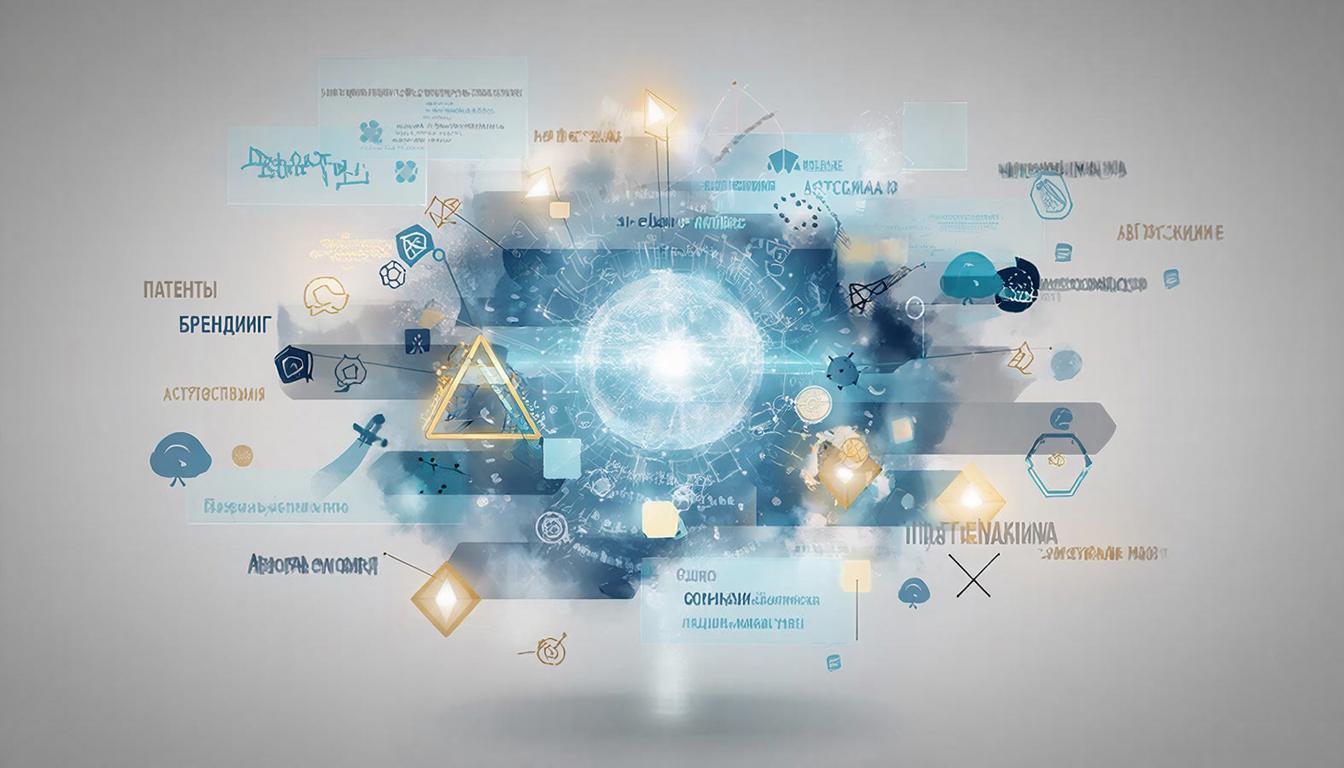
Intangible assets (IA) are identifiable non-physical objects used in a company’s activities for more than 12 months to generate income (patents, software, trademarks, know-how). They are not intended for resale and are supported by documents (certificates, licenses).
Key characteristics: ability to generate economic benefits, separability from other assets.
Intangible assets (IA) are company resources that lack physical form but possess value and are capable of generating future economic benefits. Simply put, they are the firm’s “intangible wealth“: ideas, rights, knowledge, and reputation, which are often more valuable than machinery or buildings. Unlike tangible objects, they cannot be touched, yet they are now the primary driver of value and competitive advantage for giants like Apple or Google. Their value lies in the exclusive right to use the object and derive profit from it. As a financial consultant with 15 years of experience, I have seen companies with modest offices but powerful patents or brands being sold for billions, while owners of factories without unique technologies struggle to make ends meet. Understanding the essence of these assets is the first step towards managing modern capital.
What Are Intangible Assets in Simple Terms? The Essence and Core Concept
Imagine the recipe for the famous Coca-Cola sauce. It is not a bottle or a liquid, but strictly guarded information. This recipe is a classic example of an intangible asset. It cannot be placed on a shelf, yet it generates colossal income for over a century. The essence of intangible assets is that they represent legally secured rights to the results of intellectual activity or means of individualization. A company controls them, and they are expected to yield future economic benefits.
The main difference from tangible assets is the absence of physical substance. While a machine can be repaired and a building can be seen, software, a brand, or a patent exist in the legal and informational sphere. Their value is often difficult to determine precisely, but it can many times exceed the book value of all the firm’s tangible resources. For example, the value of the “Apple” brand is estimated at hundreds of billions of dollars, which is many times greater than the value of its factories and retail stores.
From my expert perspective, a key characteristic of such resources is the synergistic effect. A trademark alone is just a picture. But combined with competent marketing, a quality product, and customer loyalty, it transforms into a powerful asset that ensures price premium. It is precisely this ability to multiply the effectiveness of the company’s other resources and create “economic moats” 1“Economic moat” is a term popularized by Warren Buffett, meaning a company’s long-term competitive advantage that protects its business from competitors’ attacks, like a castle surrounded by a moat. that makes them so valuable.
For a beginner, it’s important to remember: if an asset can be protected in court (like a patent or copyright), it can be managed separately from personnel, and it generates or will generate money, then you are most likely dealing with an intangible asset. It’s not just a “good idea,” but a formalized and accounted-for object in which investments have been made.
“In the modern economy, value is increasingly created by invisible assets: software, design, data, unique business processes. Accounting for and managing them is a new essential literacy for a manager,” notes economist, professor at HSE University Alexey Rybakov.
Thus, the essence of intangible assets lies in transforming intellectual effort and reputation into a formalized, legally protected, and income-generating object of accounting and management.
Intangible Assets: Characteristics and Main Types
For an object to be recognized as an intangible asset in accounting and management accounting, it must meet several strict criteria.
First, it must be identifiable, meaning separable from the company and capable of being sold or transferred separately.
Second, the organization must have control over it—the right to obtain economic benefits from it and restrict others’ access to it.
Third, future economic benefits (income, cost reduction) are expected from it. And finally, its cost can be reliably estimated.
The types of intangible assets are extremely diverse. They can be systematized into the following table, which clearly shows the main forms of intangible assets.
| Category | Specific Examples | Key Characteristic |
|---|---|---|
| Intellectual Property Objects | Patents for inventions, utility models; trademarks and service marks; computer software and databases; breeding achievements. | Protected by patent law or copyright. The most protected type. |
| Exclusive Rights | Licenses for certain types of activities (e.g., telecommunications); rights to use intellectual property objects. | Granted by government agencies or other rights holders. |
| Business Reputation (Goodwill) | Advantages arising from established connections, company name, customer base. | Arises only upon acquisition of a company and does not exist separately from it. |
| Other Objects | Know-how (trade secrets); rights to commercial designations; rights to topologies of integrated circuits. | Often based on confidentiality of information. |
A frequent question that deserves a separate answer: is a trademark an intangible asset? Absolutely, yes. It is one of the most common and valuable types of IA. It individualizes goods or services and, when managed properly, becomes a powerful tool for attracting customers and maintaining a premium price. In my practice, there was a case where a small confectionery factory was purchased by a large holding. The valuation of the equipment amounted to 50 million rubles, while the cost of a registered and recognized regional trademark was an additional 120 million. The brand was the key object of the deal.
Thus, knowledge of characteristics and types allows not only for the correct accounting of these resources but also for their strategic accumulation, strengthening the company’s market position.
Intangible Assets: Practical Examples from Life and Business
Theory becomes clearer when supported by specifics. Let’s look at examples of intangible assets that surround us daily. The Windows operating system on your computer is a set of computer programs protected by the copyright of Microsoft Corporation, its key IA. Google’s search algorithm is strictly guarded know-how, the company’s most valuable asset. The design and shape of the Coca-Cola bottle, protected as an industrial design, is another example.
On a smaller scale, for small businesses, intangible assets also exist. These may include:
- Developed and registered software for cafe automation.
- An original logo and name registered as a trademark.
- A government-issued license for providing educational or medical services.
- A unique training methodology formalized as a fitness center’s know-how.
- An established base of loyal customers that forms business reputation.
In the creative sphere: a book manuscript, a film script, a musical composition—all these are copyright objects that, after publication and monetization, become assets of a publishing house or studio. By investing in the creation or acquisition of intangible assets, a company lays the foundation for future income. I always advise entrepreneurs to pay attention to the legal formalization of rights to the results of intellectual labor from the very beginning—this protects against idea theft and creates real business value.
Capital and Intangible Assets: What Connects These Concepts?
The concepts of capital and intangible assets are inextricably linked. If traditionally capital was perceived as money, equipment, and land, then in a post-industrial economy, knowledge becomes the key factor of production. Therefore, intangible assets are precisely the modern form of capital, often called intellectual capital. They, like money, are invested with the aim of obtaining a return.
The structure of intellectual capital is often divided into three components: human capital (employee knowledge and skills), structural capital (patents, databases, processes), and customer capital (brand, customer relationships). The task of management is to transform unformalized human capital into formalized structural capital, i.e., accounted IAs. For example, when the experience of the best employee is codified in the form of a manual or program, the company becomes less dependent on a specific individual and creates a sustainable asset.
Investments in Intangible Assets: A Growth Strategy in the 21st Century
Investments in intangible assets today are not exotic but a necessity. They are a driver of innovation and the basis for long-term competitive advantage. Investments in intangible assets refer to targeted investments of funds or other resources in their creation, acquisition, or development.
Investments in intangible assets include the following actions:
- Funding R&D (research and development) to create a new patent.
- Costs for developing and registering your own trademark.
- Purchasing an exclusive license to use someone else’s advanced technology.
- Investments in creating a unique software product.
- Costs for a large-scale marketing campaign to build a brand.
Such investments, especially in innovative activities, are associated with high risks (research may yield no results), but also with potentially super-high returns. Long-term investments in intangible assets form the basis of the business model for companies like pharmaceutical giants, which invest for decades and billions in creating a new drug to then receive income under patent protection for 15-20 years.
My experience shows that companies that systematically maintain accounting for the acquisition and creation of intangible assets and consider them as a line of strategic investments, rather than just expenses, demonstrate more sustainable growth in the long term. They create “assets of the future,” protected from direct competition.
Types of Investments in Intangible Assets: Internal Creation vs. External Acquisition
There are two main paths. The first is internal development (creation). The company, using its own resources or contractors, conducts research, develops software, builds a brand. All expenses are capitalized, gradually forming the cost of the asset. The second path is purchasing a ready-made asset externally. For example, acquiring a startup along with its patents or buying a license. The choice of strategy depends on available competencies, time, and financial resources.
Accounting, Valuation, and Amortization: How Intangible Assets Work in Numbers?
For an asset to work for a company, it must be correctly valued, accepted for accounting, and its cost properly written off.
How is the Cost of Intangible Assets Determined?
Calculating the cost of intangible assets is a complex task, often requiring the involvement of professional appraisers. There are three classic approaches: income-based (valuing future cash flows from the asset), cost-based (valuing all incurred costs of creation), and market-based (analyzing comparable market transactions). For accounting purposes, the initial cost is formed as the sum of all actual costs of creation or acquisition.
Which Intangible Assets Are Amortized?
Amortization is the process of gradually writing off the cost of an asset over its useful life. Which intangible assets are amortized? All those for which this useful life can be determined. For example, a patent is valid for 20 years—its cost is amortized over that period. An exception is business reputation (goodwill), which is amortized over 20 years maximum, and assets with an indefinite useful life (e.g., some trademarks that can be renewed indefinitely). For these, amortization is not charged, but an impairment test is conducted annually.
How is Analytical Accounting Conducted?
Analytical accounting of intangible assets is maintained for each object separately. The accounting card records: name, identification data (patent number, certificate), initial cost, useful life, amortization method, date of acceptance for accounting and disposal. This allows for controlling the movement and condition of each valuable object.
Special Questions: Trading, Securities, and Inventory of IAs
Trading and Intangible Assets: Is There a Connection?
There is no direct connection where trading and intangible assets would be the same thing. Trading is speculative trading of financial instruments (stocks, currencies) on short-term intervals. However, analyzing a company’s intangible assets is a crucial part of fundamental analysis for a long-term investor. A strong patent portfolio or a powerful brand are signs of a sustainable and promising company whose stock price may rise. Thus, IAs are an object for analysis, not an instrument for trading.
Are Securities Intangible Assets?
No, securities are not intangible assets of the issuing company. For the owning company itself, shares of another firm are a financial investment. However, the rights that a security certifies (e.g., the right to a share in a business—a stock) have an intangible nature but are classified differently. Intangible financial assets is more of a macroeconomic term referring to derivatives, insurance policies, but is rarely used in corporate accounting. These concepts should not be confused.
How to Conduct an Inventory of Intangible Assets?
The procedure answering the question how to conduct an inventory of intangible assets is regulated and includes several steps. First, an order and a commission are created. Then the commission verifies the existence of documents confirming the company’s rights (patents, certificates), reconciles data with analytical accounting cards. Special attention is paid to the correctness of determining useful lives and calculating amortization. Results are documented in an inventory act (form INV-1a). The goal is to ensure that all assets are accounted for, valued correctly, and that there has been no unauthorized write-off or, conversely, concealment of assets.
The ability to identify, value, and competently manage intangible assets is no longer the prerogative of accountants and lawyers of large corporations. It is a critically important skill for any entrepreneur, investor, and manager in the digital age. How well you see and nurture this “invisible wealth” determines the future value and sustainability of your business. Start small: register a trademark, properly formalize rights to developed software, value your business reputation—and you will lay a solid foundation for growth in the new economy, where the main values are created by the mind, not by hands.


📝
- 1“Economic moat” is a term popularized by Warren Buffett, meaning a company’s long-term competitive advantage that protects its business from competitors’ attacks, like a castle surrounded by a moat.