
An airdrop in cryptocurrency is the free distribution of tokens by a blockchain project to users as a marketing tool to attract attention, raise awareness, expand the community, and reward early participants. To receive tokens, one often needs to perform simple actions (subscription, repost, product testing) or hold other coins. The process itself resembles the distribution of samples in traditional marketing, but requires caution due to fraudulent schemes.
In the dynamic world of digital assets, there exists a unique phenomenon capable of bringing an investor not only profit but also early access to promising technologies. This mechanism, known as an airdrop, long ago ceased to be just a marketing gimmick and has transformed into a sophisticated tool for ecosystem development, power distribution, and rewarding true project supporters. Unlike superficial reviews that offer only a shallow understanding, this article will immerse you in the very essence, revealing not only the basic principles but also strategic aspects, risks, and hidden opportunities that most guides remain silent about. Drawing on years of experience participating in dozens of distributions, from the very first and primitive ones to modern, complexly structured campaigns, I will break down everything you need to know to not just collect “free money“, but to consciously participate in shaping the future of the blockchain industry.
Airdrop: What Is It in Cryptocurrency?
If we talk about the essence of the concept “what is it in cryptocurrency an airdrop”, it can be defined as the gratuitous distribution of tokens of a new or existing blockchain project to wallets of a certain category of users. This is not charity, but a strategic move with deeply thought-out goals. Originally, this term came from traditional marketing, where it meant distributing product samples, but in the digital space, it has acquired a new, powerful meaning. In my observations, the evolution of this phenomenon has gone from simple “gifts” for registration to complex programs requiring active participation in the life of the protocol.
The main misconception of beginners is to consider such distributions pure chance or easy money. In fact, practically every serious drop is a project’s response to specific challenges: the need for decentralization of governance, creating liquidity, or forming a loyal community. I participated in one of the early airdrops of the Stellar project, when the network simply sought to populate itself with its first users, and I compare this with modern campaigns, for example, from DeFi protocols like Uniswap or dYdX, where complex, multi-month activity was rewarded. The difference is colossal.
It is important to understand that from a legal point of view, the received assets are rarely a “gift” in the classical sense. Often, it is a reward for providing attention, data, or for test-driving the technology. In this way, projects do not sell tokens, which allows them to bypass some regulatory complexities in the early stages, but also imposes certain obligations on the recipients, for example, tax ones. In some jurisdictions, coins received this way are considered income and are subject to declaration.
The philosophy of a competent approach to such campaigns lies in a paradigm shift: from “how to get free tokens” to “how to become a valuable ecosystem participant whom the project will want to reward“. This shifts the focus from passive waiting to active research actions, analysis of documentation, and a conscious choice of projects for interaction. It is this approach, which I have been advocating for several years, that allows one not to waste time and gas fees in vain, but to concentrate on potentially the most significant events.
Thus, the essence of a modern airdrop is a symbiosis of interests. The project gets decentralized token distribution, active users, testers, and protection from attacks. The user receives financial reward, voting rights in governance (if it’s a governance token), and the status of an early adopter of the technology. This is a mutually beneficial exchange, but, as in any exchange, there are its own rules, risks, and strategies, which we will discuss in detail later.
Historical Roots and Evolution of the Distribution Mechanism
To fully understand the current state, one must look back. The first mass distributions of digital assets were primitive and often part of bounty programs. I remember well how in 2017, many projects on the wave of the ICO boom gave away small amounts of tokens simply for subscribing on Telegram and reposting on social networks. The quality of such projects was extremely uneven, and the value of the received coins in most cases tended to zero. However, it was an important stage that showed the community the power of the marketing tool.
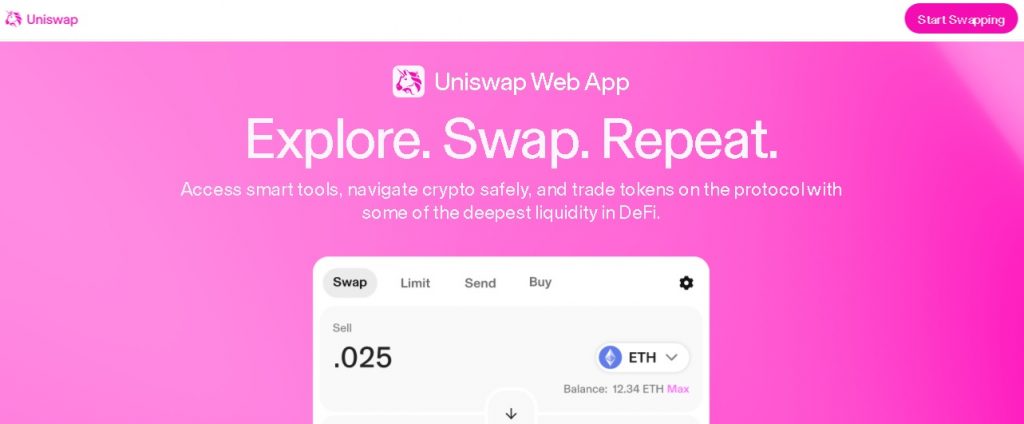
The turning point that changed the perception of the entire space regarding what an airdrop means and how it works was the drop of the UNI token by the decentralized exchange Uniswap in September 2020. This was not just a gift; it was a declaration of principles. Uniswap rewarded everyone who had ever used their protocol before a certain date with an amount of 400 UNI, which at its peak was worth tens of thousands of dollars. The key point was that the team did not keep a share in governance for themselves, transferring all rights to the community. This step set a precedent and established a new, very high bar of expectations.
Following Uniswap, a series of projects began that rewarded not just “passers-by”, but specific actions: providing liquidity (protocol 1inch), margin trading (dYdX), using Layer 2 (Optimism, Arbitrum). The complexity and “cost” of actions for potentially receiving a reward increased, which filtered out purely greedy hunters and attracted those who were genuinely interested in the technology. Evolution clearly showed: projects learned to filter the audience using distribution mechanics.
Today we observe a third wave, where the focus shifts to constant, not one-time interaction. Projects are implementing point systems or leaderboards that track user contribution in real time. This creates long-term engagement and allows teams to precisely reward the most dedicated users in the future. This model, in my opinion, is the fairest and most effective for both sides. It turns the process from a lottery into a conscious career within the ecosystem.
Historical context is important for forming the right mindset. Expecting to get something significant today simply by creating a thousand wallets is naive. Modern mechanisms require deep immersion, financial and time costs. Understanding this evolution allows one not to chase the ghosts of the past but to adapt one’s strategy to the current realities, where value is determined by real contribution, not by the number of accounts.
Airdrop Goals: Why Projects Give Away Millions
Behind the external simplicity of a gratuitous distribution lies a whole complex of strategic Airdrop goals pursued by developers. The first and most obvious is marketing and attracting attention. In the noisy information field of the crypto market, a token drop, especially a large one, guaranteedly creates hype, attracts media coverage, and new users who want to be in time for the next possible event. It is a powerful tool for growing the user base, which in effectiveness often surpasses traditional advertising.
The second, deeper goal is true decentralization. The distribution of governance tokens among thousands of users transfers power over the protocol from the founders to the community. This is not just a beautiful gesture; it is a fundamental principle of Web3. When token holders vote for parameter changes, updates, or treasury distribution, the protocol becomes truly impartial and resistant to censorship. By participating in such distributions, you receive not just a coin, but a piece of responsibility for the future of the technology.
The third goal is stimulating specific behavior in the network. Projects can use crypto airdrops to “seed” liquidity on new exchanges or in their pools, to increase activity in a certain segment of the protocol (e.g., in collateralized lending), or to migrate users from an old smart contract version to a new one. This is a subtle tool for managing the project’s economy without direct coercion, where the reward acts as an incentive.
The fourth goal is fairness and rewarding early followers. This is a matter of ethics and long-term loyalty. Users who took risks, tested raw products, provided liquidity in the early days, rightfully deserve a share in the success. By rewarding them, the project strengthens its reputation and creates an army of defenders and ambassadors. For me personally, this aspect has always been key when choosing projects for interaction — I look for teams that publicly state their intention to reward the early community.
Finally, there is a purely practical, technical goal: the distribution of tokens to ensure network security in Proof of Stake models1Proof of Stake (PoS) or “Proof of Stake” is an energy-efficient consensus algorithm in blockchain, where instead of expensive mining (Proof of Work), network security is ensured by participants who freeze (stake) their coins to confirm transactions and create new blocks; the more coins a participant has, the higher their chances of being selected as a validator and receiving a reward, and dishonest behavior is subject to penalties.. The more independent holders there are, the more distributed and resilient to attacks the network becomes. Thus, a strategic distribution is not an act of generosity, but an investment in the viability, security, and decentralization of the protocol itself, which in the long term increases the value of all assets within the ecosystem, including those that ended up in your wallet.
Airdrop Mechanisms: How Winners Are Chosen
Understanding the inner workings, that is, the Airdrop mechanisms, is critically important for effective participation. At the core always lies a blockchain snapshot. The project team at a specific moment in time (at a specific block number) records the state of the network: which addresses did what. The algorithms for analyzing this data are becoming more complex. Before, it was enough to simply make a transaction. Now, many factors are taken into account.
Modern evaluation systems use complex formulas weighing various activity metrics. For example, a simple list of actions that can be taken into account looks like this:
- Volume and frequency of transactions through the protocol.
- Amount and duration of liquidity provision (TVL — Total Value Locked).
- Participation in governance votes (if applicable at the time of the snapshot).
- Using multiple protocol functions (e.g., swaps, farming, staking).
- Duration of activity (difference between first and last transaction).
A certain “weight” is assigned to each action. For example, providing $10,000 in liquidity for 6 months will be valued much higher than ten small swaps of $100 each. Projects strive to filter out sybils — users creating multiple wallets to artificially inflate activity. For this, behavior patterns, sources of funds, intersecting addresses are analyzed, and anti-sybil algorithms are used, such as those used by Gitcoin Passport.
In my practice, I have encountered that the successful receipt of significant rewards has always been associated with “human”, non-standard interaction with the protocol. Instead of trying to cheat the system with many small transactions, it is much more effective to choose 2-3 promising projects and deeply integrate into them: use them as the main tool for your real needs, provide liquidity, participate in testnets, and discuss the project on social networks. Such behavior looks organic to algorithms and is highly likely to be rewarded.
The final formula for success in modern conditions is not quantity, but quality and sincerity of interaction. Selection mechanisms are getting smarter and are aimed precisely at identifying users who bring real benefit to the network. This is a fair approach that rewards belief in the technology and contributes to the healthy growth of the ecosystem, not parasitism on it.
Main Types of Airdrops: From Standard to Exclusive
Classification helps to systematize the approach. There are various types of Airdrops, each with its own logic and requirements. The first and most common type is retroactive, or retrospective. It is to this type that legendary distributions like UNI and DYDX belong. Their essence is that the project rewards users for actions taken in the past, before the official announcement of the token. It is impossible to participate in such a drop after the fact, which generates hype around potentially “retroactive” projects today.
The second type is distributions for specific actions. They are announced in advance, and any user has time to fulfill a number of conditions: connect a wallet to the site, make a repost, subscribe to a channel, sometimes — make a test transaction. Such campaigns are often conducted by projects at the earliest stages to gather an audience. Their rewards are usually small, but the risks are also minimal. In my practice, there was a case when I performed a similar set of actions for a little-known project, and a year later its token unexpectedly took off, bringing a profit of hundreds of percent from the five minutes spent.
The third, increasingly popular type is loyalty or points systems. The project does not announce a drop directly but introduces a system of points that users accumulate for activity. The community understands that these points will most likely be converted into tokens in the future. Vivid examples are the programs of many protocols in the Arbitrum and Starknet networks. This creates long-term engagement, as the user regularly returns to the protocol to “farm” their activity.
The fourth type is exclusive or for holders of certain assets. The project takes a snapshot of holders of a token from another, often related project, and distributes new tokens among them. For example, holders of NFTs from a certain collection may receive a token from a related metaverse project. This approach allows precise targeting of an already formed and loyal audience.
Finally, one can highlight raffle distributions (lotteries), where rewards are distributed randomly among those who have fulfilled the minimum conditions. Their value from the point of view of serious earnings is small, but they can serve as an introduction to the mechanics for beginners. For an experienced participant, the focus should be on retroactive and loyalty systems, as they imply the greatest reward for the most significant contribution and require deep analysis of the project, its tokenomics, and roadmap.
How Does It Work? Airdrop: The Technical Side of the Process
To move from theory to practice, one needs to clearly understand how an airdrop works on a technical level. The process is always initiated by the project team. After defining the goals and selection criteria, a smart contract is developed that will carry out the distribution. This contract contains the logic: a list of recipient addresses and the corresponding token amounts. The data for this list is formed based on off-chain analysis2On-chain analysis is the study of open data directly from the blockchain to analyze cryptocurrency transactions, network activity, and participant behavior in order to identify trends, assess risks, and predict price movements. It uses the transparency of the blockchain to track fund flows, assess supply/demand and investor sentiment, acting as a powerful tool for traders, investors, and for compliance in the field of anti-money laundering (AML). of blockchain data, which was discussed earlier.
Then the key event occurs — the creation of a snapshot. The team announces the block number (Block Height) at which the network state will be fixed. All actions you performed before this block are taken into account, and after — they are not. After the snapshot is created, a preparation period follows, which can last from several days to months. During this time, final data analysis, cleansing from sybils, and the formation of the final merit list take place. Often this stage is accompanied by rumors and speculation in the community.
The direct distribution is the invocation of a function in the smart contract that “mints” (creates) new tokens and sends them to the wallets from the list. Sometimes tokens are not sent immediately but are placed in a vesting contract. Vesting is the gradual unlocking of tokens according to a certain schedule (e.g., 25% immediately, and the rest over 3 years). This is done to protect the token’s value from immediate sale (dumping) and for the long-term retention of participants in the ecosystem. When encountering vesting, it is important to plan your tax burden, as tokens may be considered received as they are unlocked.
From the user’s side, the receipt process looks like the sudden appearance of unknown tokens in the wallet. Here lies the main technical danger — fraud. Malicious actors often send phishing tokens with similar names, which, when attempting to sell or approve them, give access to your wallet. The golden rule: never interact with unfamiliar tokens that you did not expect to receive. Use only official project announcements through their verified channels: Twitter, Discord, a blog on Mirror or Medium.
Understanding this cycle allows one to be prepared. You know that after an active phase of interaction with a project, a waiting period begins. You track the announcement of the snapshot and then wait for the official announcement about the distribution. During this time, it is critically important to ignore personal messages on social networks with offers to “confirm your wallet” or “receive the drop early“. Technical proficiency in this matter is the best protection against losing not only the potential reward but also all the funds in your address.
Step-by-Step Strategy: How to Get an Airdrop Consciously
Let’s move on to a practical strategy, answering the question how to get an airdrop systematically, not chaotically. The first and most important step is not registration anywhere, but research (DYOR — Do Your Own Research). You need to learn to find projects at an early stage, even before everyone starts talking about them. For this, I use several sources: aggregators of DeFi protocols by blockchains (DeFiLlama), testnet calendars, GitHub repositories of major venture funds (a16z, Paradigm) to see who they invest in. A project with a solid background and venture funding is a good candidate.
The second step is evaluating tokenomics. If a project already has a token, an airdrop is unlikely. One needs to look for quality projects without a token but with active development and a live community. Study their documentation: often there may be mentioned “decentralized governance system” or “community rewards” as part of the roadmap. The third step is organic interaction. Allocate a small budget (which you are ready to lose, there are always risks) and start using the protocol as intended. If it’s a DEX — make swaps, if it’s a lending protocol — deposit and borrow assets, if it’s a game — play.
The fourth step is intensity and regularity. A single transaction is unlikely to yield a significant result. Try to integrate the protocol into your regular activities. For example, if you actively trade, do some of your swaps through the DEX you are studying. If you are a staker — place some of your funds in a new liquid staking protocol. Your goal is to look like a real, not a simulated user for the analysis algorithms. The fifth step is participation in the ecosystem’s life. Go to Discord, ask meaningful questions about development, participate in testnets and bug bounties if they exist. This not only increases your chances but also gives a deep understanding of the product.
For clarity, a typical cycle of interaction with a potential project can be represented in a table:
| Stage | Actions | Goal | Approximate Budget |
|---|---|---|---|
| Research | Analysis of team, investors, roadmap | Selection of 3-5 promising projects | Time |
| Entry | Making first transactions, connecting wallet | Appearance in blockchain history | $50-$200 |
| Integration | Regular use, testing different functions | Increasing address “weight” | $500-$2000 (part of general portfolio) |
| Participation | Communication in Discord, testnets, votes (if any) | Forming reputation in the community | Time |
| Waiting | Monitoring news, ignoring phishing | Safe receipt of reward | Setting up alerts |
Such a system turns the hunt for drops from a lottery into a conscious investment-research activity. You are not just ticking boxes; you are investing in the ecosystem, and it is this investment, not greed, that ultimately gets rewarded by projects interested in long-term partners, not raiders.
Crypto Airdrops: Choosing a Blockchain and Wallet
An important aspect often overlooked is the choice of ecosystem. Crypto airdrops are most likely in new, actively developing Layer 1 and Layer 2 (L1/L2) ecosystems that are competing for users. At one time, such an ecosystem was Ethereum, then Binance Smart Chain, then Solana, Avalanche, Polygon. Today, the focus has shifted to L2 solutions within the Ethereum ecosystem itself: Arbitrum, Optimism, zkSync Era, Starknet, Base, Blast. Each of these networks and their native protocols strive to attract users and decentralize their governance.
Therefore, your strategy should include a multi-chain presence. Do not concentrate on only one network. Allocate funds and time for research and activity in 2-3 of the most promising ecosystems, in your opinion. At the same time, it is important to use not just an exchange wallet, but a non-custodial one, like MetaMask, Rabby, or Frame. Create separate addresses for each ecosystem or even for different types of activity to minimize risks and better structure your activities.
The key point is the security of the seed phrase and private keys. Never, under any circumstances, enter them on websites that came via email or from personal messages. Use hardware wallets (Ledger, Trezor) for storing large sums and actively interacting with unverified contracts. Remember that every transaction signature in the network can carry a risk if the contract contains malicious code. Always verify contracts on sites like Etherscan, read comments and code if possible.
It is also worth considering the cost of gas. Activity during periods of high fees on the Ethereum network can eat up all potential income. Therefore, working in L2 networks, where fees are orders of magnitude lower, is more justified for regular interactions. However, new L1s should not be ignored: networks like Aptos, Sui, or Sei can also become a source of large token distribution events, as they are in a phase of active growth. Diversification across networks is diversification both in risks and in potential opportunities.
Ultimately, the choice of blockchain should be based not on rumors about “upcoming airdrops”, but on your belief in the technology and its long-term prospects. If you believe that, for example, ZK-rollups are the future of scaling, then your attention should be focused on Starknet and zkSync. If you believe in optimistic rollups — on Arbitrum and Optimism. Your activity will be more meaningful and, consequently, more valuable to the project if it stems from your convictions, not from greed.
Risks and Security: The Dark Side of “Free” Tokens
No serious discussion is complete without analyzing threats. Risks and security — this is the area where lack of awareness leads to catastrophic losses. The most obvious risk is financial. You spend real money on gas fees, conducting transactions in the hope of a future reward that may never happen. The project may close, change plans, or your activity may prove insufficient. Therefore, rule number one: interact only with money you are fully prepared to lose. Consider gas fees as a payment for learning and exploring new technologies.
The second, more insidious risk is phishing and fraud. As soon as a project announces or conducts a distribution, thousands of malicious actors activate. Their methods are sophisticated: cloned websites, fake support accounts on Telegram and Discord, fake tokens sent to your wallet with a request to “activate” them through a phishing site. I personally have received dozens of such tokens after every known drop. Remember: no legitimate project will ever write to you in personal messages first and ask for a seed phrase or wallet confirmation.
The third risk is legal and tax. In many countries, assets received in this way are considered income at the time of their receipt or unlocking (in case of vesting) and are subject to taxation at the market value on that date. Unreported income can lead to large fines. It is necessary to consult with a local tax specialist knowledgeable in cryptocurrencies and keep meticulous records of all received assets, dates, and their value.
The fourth risk is reputational, related to sybilling. If you create many wallets to inflate activity and the project detects you, you will not only not receive a reward, but your main address may be blacklisted by the project and its partners for the future. Modern methods of transaction graph analysis are very effective. Do not try to deceive the system — it is not profitable in the long run. Value lies in a sincere, “human” behavior pattern.
The biggest risk in chasing airdrops is losing vigilance and starting to sign any transactions in pursuit of a freebie. Security should always come first.
The fifth risk is emotional burnout and wasted time. An obsessive search for “the next Uniswap” can turn into useless scrolling of Twitter and Discord. To avoid this, structure your approach as described above: limit the number of projects you research, allocate a fixed time for this activity, and consider it as part of the overall process of learning and investing in the crypto industry, not as the main earning strategy.
Airdrop Cryptocurrencies: How to Earn, Not Lose
Now, understanding the risks, let’s focus on a positive strategy and answer the main question of many: how to earn on airdrop cryptocurrencies? The key is to change the terminology: not “earn”, but “receive fair reward for contribution“. Your earnings will be a direct consequence of the usefulness you bring to the network. Start by building a reputation on one or two addresses in selected ecosystems. Let your transaction history be clean, meaningful, and deep.
Diversify the types of your activity within an ecosystem. Don’t limit yourself to one protocol. If you are on Arbitrum, interact with major DEXs (Uniswap, Camelot), lending protocols (Aave, Radiant), derivatives platforms (GMX, Dopex), NFT marketplaces. This shows that you are an active resident of this ecosystem, not someone who came for a one-time profit. Many projects take snapshots not only of their own activity but also of the overall activity of the address on the network.
Participate in governance. If a project already has a governance token, even if you did not receive it through an airdrop, buy a small amount on the market and take part in voting. This is a powerful signal of your engagement. Keep an eye on ecosystem grant programs: they often fund new projects that may later hold distributions for their early supporters. Being part of such a community is invaluable.
Keep records. Create a simple table where you record: project, date of starting interaction, actions taken, funds spent on gas, official announcement links. This will help not only analyze the effectiveness of your strategy but also for future tax reporting. When you receive a reward, record the date of receipt, the number of tokens, and their price at that time.
And finally, develop an exit strategy. What will you do with the received tokens? Sell immediately, partially take profit, stake for additional income or voting? This decision should depend on your belief in the project itself. If you truly believe in it and actively used it, perhaps it’s worth leaving some tokens for long-term holding and participation in governance. If you interacted purely mechanically, it’s probably wiser to sell the assets and reinvest the funds in new research. Planning an exit before receiving the reward helps avoid emotional and impulsive decisions at the moment when “free money” falls into your wallet.
Upcoming Cryptocurrency Airdrops: How to Separate the Wheat from the Chaff
The topic of upcoming cryptocurrency airdrops is always surrounded by speculation and fakes. You, as a serious participant, need to develop immunity to noise. Rely only on official sources. If a project has not officially announced a token or distribution, any rumors are just manipulation to attract attention. Often such rumors are spread to increase activity in the protocol and sell their investments profitably.
What should you pay attention to? Actions, not words. Indirect signs of a potential event can be: the launch of a loyalty program with points, the submission of a proposal for improvement about launching a token on the governance forum, hiring a tokenomics specialist, an active testnet phase with a promise of reward for participants. Such signals are much more reliable than anonymous “insider” tweets.
Be wary of projects that too actively hint at a future drop. This is often a sign that their product is weak and they are trying to attract users solely through speculation. A quality project focuses on developing technology, and addresses the issue of tokens and decentralization when the product is ready and has sustainable traffic. Your task is to find such projects before everyone starts shouting about them.
Use information aggregators wisely. Sites like Airdrops.io or CoinMarketCap Airdrops are good for tracking already announced distributions for simple actions, but they rarely help find “gems”. For deep searching, dashboards like DeFiLlama are better, where you can filter protocols by TVL, token presence, and blockchain. Look for projects with high TVL and no token — these are the main candidates.
Ultimately, the best way to predict “upcoming” events is not to chase them, but to create future opportunities for yourself today. Your today’s meaningful activity in promising but not yet popularized protocols is the most reliable ticket to the loudest distributions of tomorrow. History shows that the largest drops were a complete surprise to the majority, but a natural reward for those who believed in the technology and used it as intended.
Personal Experience: From Uniswap to Starknet — A Story of Interaction
Let me share personal experience so that theory takes on practical features. My first significant receipt was, of course, with UNI. At that time, I was simply actively using the protocol for arbitrage and providing liquidity, without even thinking about a reward. It was the best illustration of the principle “reward finds those who create value“. I partially sold the received tokens, partially left them for staking and voting, which later brought several less known but pleasant drops from auxiliary protocols in the ecosystem.
Another indicative case is related to the Arbitrum network. Even before the launch of their points program “Arbitrum Odyssey”, I started using the bridge, tried the main applications. When the Odyssey started, I completed all the tasks, spending time and gas, but without certainty of the result. Later, this very activity, I am convinced, played a key role in receiving a significant reward from the Arbitrum fund. This is an example of how an ecosystem rewards not just a one-time action, but long-term residence in it.
There was also a negative experience. I spent several weeks and a lot of ether on active interaction with one protocol in the Solana ecosystem. The project seemed promising, but in the end, the team decided not to issue a token but to focus on monetization through fees. I did not receive a reward, but gained invaluable experience using new technology and understanding its limitations. The “gas fee” in this case I wrote down in the “education” column.
Now my focus is on protocols in the zk-rollups ecosystems, especially Starknet. I participate in testnets, try decentralized applications on the Goerli testnet, and communicate on Discord. I don’t know if there will be a drop and when, but I am genuinely interested in zero-knowledge technology and want to be among the first to master it. This attitude removes the stress of waiting and turns the process into an exciting exploration. If a reward comes, it will be a pleasant bonus to the knowledge.
This journey has taught me the main thing: the greatest value that can be gained from this activity is not the tokens in the wallet, but the accumulated knowledge, experience, understanding of trends, and reputation in the community. No one can steal these assets from you, and they will bring dividends (both financial and intellectual) for many years, regardless of whether this or that project holds a distribution or not.
Airdrop: How to Get Cryptocurrency for Free and Legally
Bringing all aspects together, let’s answer the basic but important question: how to get Airdrop cryptocurrency for free and at the same time remain within the legal framework? The answer lies in the plane of awareness and legitimacy of actions. Free does not mean effortless. Your efforts are time, attention, analysis, and risk-taking (including financial risks of losing gas). Legality, however, is ensured by compliance with the project’s rules and your local legislation.
Always use only your own, legally obtained wallets and funds for interaction. Do not try to deceive systems with bots or sybils — this not only violates project rules but in some jurisdictions may be considered fraud. Your activity should be manual, human, and, if possible, personally useful for you. For example, if you need to exchange tokens, do it through the DEX you are studying, not through a centralized exchange, just to “tick a box”.
From a legislative point of view, be transparent. Keep records, as already mentioned. If the amount of income received is significant, consult a tax advisor. In many countries, there are limits on tax-free income from gifts, and exceeding them requires declaration. Ignoring this can lead to serious problems that will negate all the profit received. Consider taxes as a payment for legality and peace of mind.
It is also important to respect intellectual property and project terms of use. If participation in a testnet requires signing a non-disclosure agreement (NDA), comply with it. If the project asks not to use virtual private networks (VPNs) from certain countries for interaction, respect this requirement. Participation in a blockchain ecosystem is not anonymous anarchy, but participation in a new kind of digital citizenship, where there are also rules and ethics.
The only way to truly get cryptocurrency “for free” and legally is to exchange your time and expertise for early access to innovations. You pay with attention and feedback, not money.
In the end, the most sustainable and ethical path is to become part of the ecosystem. You are not taking something for free; you are contributing to the development of a decentralized network and, in gratitude, receive a share of ownership and governance rights in it. This is a fundamental shift compared to traditional economic models, where the user is merely a consumer. You become a co-owner, and this new role carries with it both new opportunities and new responsibility — to yourself, to the project community, and to the regulatory authorities of your country. It is this holistic approach that turns the pursuit of a “freebie” into meaningful activity for shaping the future of the internet and finance.

📝
- 1Proof of Stake (PoS) or “Proof of Stake” is an energy-efficient consensus algorithm in blockchain, where instead of expensive mining (Proof of Work), network security is ensured by participants who freeze (stake) their coins to confirm transactions and create new blocks; the more coins a participant has, the higher their chances of being selected as a validator and receiving a reward, and dishonest behavior is subject to penalties.
- 2On-chain analysis is the study of open data directly from the blockchain to analyze cryptocurrency transactions, network activity, and participant behavior in order to identify trends, assess risks, and predict price movements. It uses the transparency of the blockchain to track fund flows, assess supply/demand and investor sentiment, acting as a powerful tool for traders, investors, and for compliance in the field of anti-money laundering (AML).