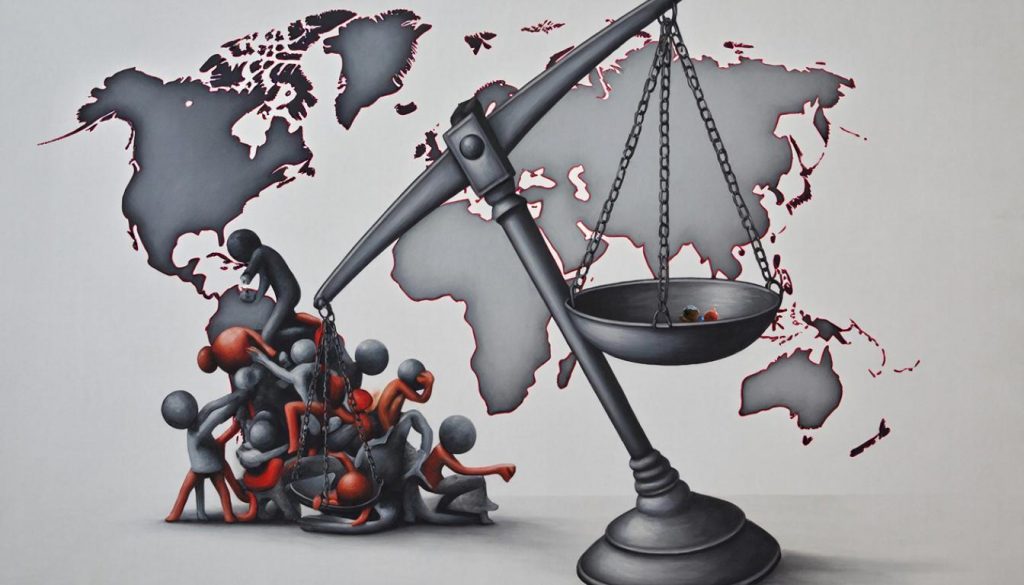
In my practice of economic analysis, I constantly encounter the question of the influence of the ultra-wealthy on global systems. The 2025 data is shocking: the capital of billionaires increased by more than 16%, reaching an unprecedented mark of $18.3 trillion. At the same time, as experts note, almost 50% of the planet’s inhabitants live below the poverty line. This is an alarming imbalance that I observe in my research.
Key Takeaways from the New Oxfam Report
This week in Davos, the World Economic Forum is taking place, where the global elite has gathered. Oxfam presented the report “Resisting the Rule of the Rich,” which I have carefully studied. It clearly shows how the oligarchy and the corporations under their control use resources to maintain power, while ordinary people struggle to cover basic expenses for food, medicine, and housing.
Reason 1: The Unfair Origin of the Largest Fortunes
From my experience in analyzing financial flows, I can say: about 60% of billionaires’ capital is based on one of three sources — inheritance, cronyism with elements of corruption, or a monopoly position. Colossal sums passed down through inheritance are forming a new aristocracy with disproportionate influence.
- The Historical Context of Inequality
The global economy has deep roots in the colonial system, which historically enriched a narrow stratum. The most vulnerable groups — the poorest layers, those subjected to racial discrimination, women — are systematically exploited, leading to social costs.
Reason 2: Monopolies as a Source of Global Imbalance
Billionaires often head monopolistic corporations. These structures dictate market rules, control pricing and conditions for suppliers and workers, without suffering significant losses in the process.
- The Rise in Billionaires and Strengthening Control The concentration of industry control directly correlates with the growth of personal fortunes. In 2025, the number of billionaires exceeded 3000 for the first time, and Elon Musk’s fortune was the first to cross the half-trillion dollar mark.
- Examples of Corporate Dominance
Jeff Bezos created Amazon, which accounts for up to 70% of online sales in key European countries. Aliko Dangote, the richest man in Africa, has a quasi-monopoly on cement production in Nigeria, influencing the entire continental market.
Reason 3: The System Allowing to Avoid Inheritance Taxes
In 2023, for the first time, more billionaires became rich through inheritance than through entrepreneurial activity. In the next three decades, heirs will receive more than $5.2 trillion. According to my estimates based on Oxfam data, 36% of billionaires’ wealth is inherited.
The Problem of Inheritance Taxation
Situation Consequences Absence of inheritance tax in 2/3 of countries for direct descendants Multi-trillion dollar fortunes are transferred without significant fiscal deductions Half of the world’s billionaires live in jurisdictions without an inheritance tax Preservation and multiplication of capital in the same hands The myth that immense wealth is always a reward for genius and hard work is actively promoted by the media, but has little to do with reality.
Reason 4: Policy in the Interest of the Elite: The US Example
The year of billionaire Trump’s presidency showed clear priorities. His administration, surrounded by the ultra-wealthy, pursued policies in the interest of the elite: it cut social programs, restricted workers’ rights, doing little to reduce the cost of living.
- Tax Reform as a Tool of Inequality
With Congressional support, taxes were sharply reduced for corporations and the ultra-rich. The 2027 bill, according to forecasts, will reduce tax payments for the top 0.1% of the richest by $311 thousand per person, while simultaneously raising taxes for low-income households and cutting social protection.

Reason 5: A Carbon Footprint Disproportionate to Responsibility
We all face the consequences of climate change: hurricanes, fires, floods. Billionaires significantly accelerate this process.
According to Oxfam, the carbon emission of one person from the top 0.1% of the richest in a day exceeds the annual emission of the poorest 50% of people on the planet. If everyone lived at such an emission level, the limit on emissions without climate catastrophe would be exhausted in less than 3 weeks.
As an expert, I believe: The growth of global inequality has reached a critical point. A tough policy towards billionaires is needed, countering the power of the ultra-rich, and decisive actions by governments to reduce the gap, limit the influence of this class, and return political weight to society.
- Examples of Corporate Dominance