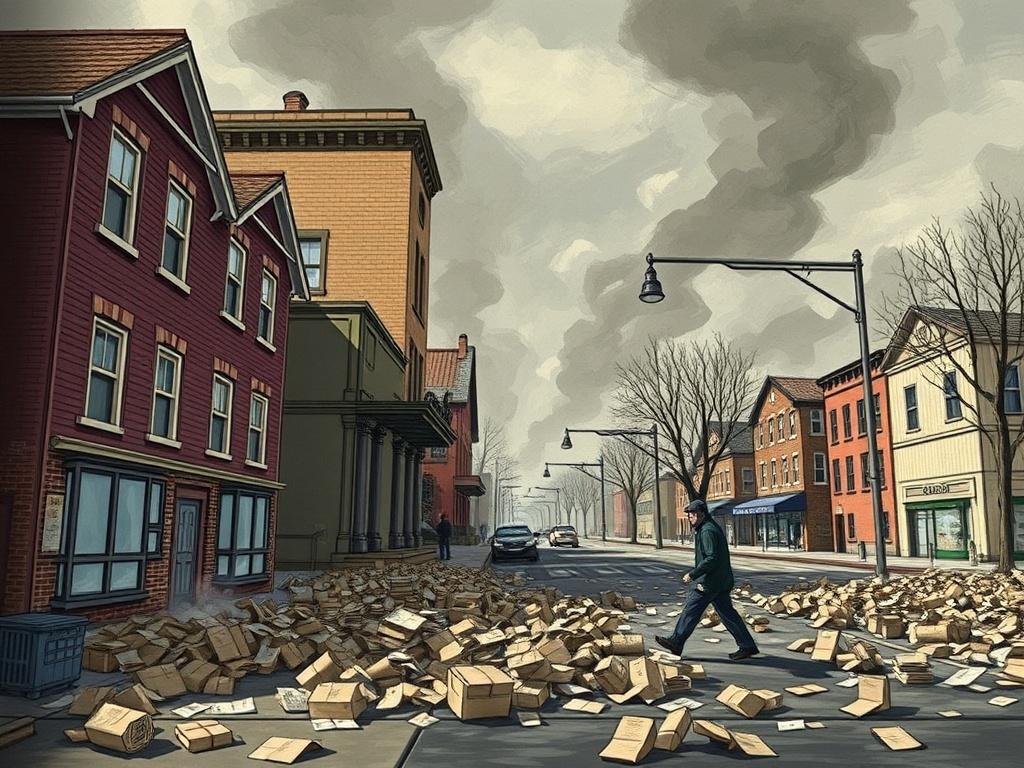
Stagflation appears in conversations about crisis like a dark cloud that simultaneously burns the wallet and chokes the labor market. In this article, I will break down the phenomenon, explain why it is dangerous, where it comes from, and what steps can be taken to mitigate losses. The material will be useful not only for specialists but also for those who want to protect their savings and understand public economic discussions. The reader will journey from simple definitions to practical recommendations for households, investors, and entrepreneurs.
What is Stagflation in Simple Terms?
In simple terms, stagflation is a situation where the economy simultaneously experiences high inflation and rising unemployment amidst slowed or negative production growth. Simply put, prices are rising, the number of jobs is decreasing, and income growth is slowing or stopping altogether. This combination seems paradoxical because usually, inflation is associated with an overheated economy, and unemployment with its cooling. During stagflation, these usual connections break down, so traditional regulatory tools work poorly.
Imagine a standard market: food prices are soaring, there are fewer customers in the store, and sellers complain about falling demand. This illustrates the problem: purchasing power is decreasing, but inflation continues to “saw away” at real incomes. For families, this means the need to review the budget and seek alternative sources of income. For businesses, it’s a difficult choice between raising prices and losing customers.
It is important to note that stagflation does not necessarily last forever, but its periods are usually painful and prolonged. Responses to it require more fine-tuned policies than in standard cases of recession or inflation separately. Ways out include a combination of measures on the supply side and curbing inflationary expectations.
I often hear fear from readers: “how to live if prices and unemployment are rising simultaneously?” The answer begins with understanding the causes and indicators: when you see rising energy prices and simultaneously a reduction in production, it’s worth preparing for a longer period of adaptation. Practical steps to protect the budget and capital are described below.
Finally, it must be remembered that stagflation is not just a theoretical trouble for economists. It is a real combination of problems that leads to the entrenchment of poverty and social risks. Understanding the mechanics gives an advantage to those who want to prepare in advance.
The Definition of Stagflation in Economics
In economics, the definition of stagflation includes a combination of three key indicators: a high level of inflation, rising unemployment, and stagnation or a fall in GDP. Economists look at the price index (CPI), employment level, and real production growth rates to confirm the presence of the problem. Furthermore, the dynamics of expectations are important – if people start expecting prices to rise for a long time, inflation becomes entrenched by itself. Formally, there are no thresholds after which stagflation is declared, but the combination of negative or low GDP dynamics with double-digit inflation and rising unemployment is an obvious signal.
Theoretical models demonstrate a violation of the classical Phillips curve, which describes the trade-off between inflation and unemployment. During stagflation, this relationship breaks down: both indicators rise simultaneously. This forces economists to seek explanations beyond standard demand shocks. Key mechanisms lie on the supply side and in expectations.
Structural factors are also considered in the definition: for example, distortions in the labor market, monopolization of certain industries, and the economy’s dependence on energy imports. A country with a vulnerable structure slides into stagflation faster after external shocks. The determinants can be different, so there is no universal “diagnostic test,” but the combination of the listed indicators is a reliable guide.
Practically, this means that the policy profile must be flexible: monitoring price expectations, active work with the labor market, and measures to restore supply. Central banks and governments must coordinate steps so as not to exacerbate both inflation and unemployment simultaneously. Wrong decisions can prolong the period of stagflation.
Academic reviews often emphasize that the definition is useful for diagnosis, but it is even more important to understand the mechanisms and channels through which the shock transmits to the real economy. Only then can an adequate combination of tools be chosen, rather than applying a standard set of recipes unsuitable for the given situation.
Stagnation and Stagflation: What’s the Difference?
The difference between stagnation and stagflation is a key question for those who want to correctly assess the state of the economy. Stagnation by itself means a prolonged slowdown in economic growth, weak demand, and low income dynamics. Stagflation adds a painful component to this – rapidly rising prices. Consequently, the task for policymakers differs in the two cases: during stagnation, demand needs to be stimulated, while during stagflation, stimuli can intensify inflation.
Illustration: during ordinary stagnation, the state can lower rates and increase spending. During stagflation, the same measures lead to price increases because supply cannot quickly ramp up production. Therefore, it is important to understand the root cause: a fall in demand or a supply shock. The choice of tools depends on this.
Another difference lies in the population’s perception of the situation. During stagnation, people are more often willing to save despite stable prices. During stagflation, purchasing power falls, which can lead to panic buying and the depreciation of savings. The social consequences of stagflation are usually more severe because both incomes and savings suffer simultaneously.
For businesses, stagnation and stagflation also create different challenges: in the first case, the priority is stimulating demand and optimizing expenses; in the second, it’s managing costs and pricing in the face of rising expenses. Decisions must consider both sides: demand and supply.
Thus, the distinction between the concepts is important not only for analysts but also for practitioners making decisions in government and the private sector. Correct diagnosis is the first step towards effective measures.
Signs of an Economic Crisis with Stagflation
Signs of an economic crisis with stagflation can be aggregated into several observable signals that help understand the scale of the problem. Among them are the simultaneous growth of consumer prices and the unemployment rate, a slowdown in industrial production, a fall in investments, and a deterioration in business expectations. If these indicators strengthen over several quarters, the transformation of an ordinary downturn into a stagflationary crisis is likely.
Another important sign is sharp and prolonged supply shocks: rising fuel prices, disruptions in raw material supplies, or sanction-related restrictions on foreign trade. Such events sharply increase business costs and fuel inflationary pressure, while demand continues to weaken. Monitoring import prices and logistical barriers helps to see the risks in advance.
Financial indicators also hint at the approaching trouble: rising bond yields, credit spreads, and a contraction in bank lending signal problems with liquidity and trust in the economy. If corporate profits fall simultaneously, this intensifies unemployment and reduces investment.
Social signs include an increase in the proportion of households experiencing difficulties paying for services, a rise in the number of small business bankruptcies, and increased social tension. In practical terms, authorities begin to introduce temporary support measures, which may not solve structural problems and only postpone the necessary adjustment.
Monitoring these signs in combination gives a chance to prepare. For households, this means early budget adaptation and income diversification; for businesses, it means preparing supply chains and hedging key risks. Timely measures can mitigate the blow to the real economy.
What is the Difference Between Stagflation and Inflation?
The difference between stagflation and inflation lies primarily in the accompanying phenomena: inflation by itself is a general increase in prices for goods and services, while stagflation is a combination of inflation with an economic downturn and rising unemployment. In simple terms, inflation can accompany a healthy economy, but when it goes hand in hand with stagnation, that’s a whole different story. Hence, different policy approaches arise.
Types of inflation help understand the difference: in inflation caused by demand growth, lowering rates and moderate fiscal policy can correct it. In inflation caused by a supply disruption, for example after an oil shock, such measures can worsen unemployment. Stagflation is more often associated with cost-push inflation, where business costs rise regardless of demand.
Expectations play a role in both phenomena. If the population believes that prices will rise rapidly, demand for protective assets increases, and inflation becomes entrenched. But during stagflation, workers’ demands for wage increases usually weaken due to unemployment, creating a paradox: prices rise, but real wages stagnate. This complicates the fight against expectations.
The distinction is critical for central banks. In conditions of pure inflation, the priority is fighting inflation. During stagflation, tightening monetary policy alone can lead to deepening unemployment. Therefore, comprehensive measures are needed that consider problems on the supply side and stimulate structural reforms.
Understanding the differences helps businesses and private individuals choose capital protection tools: during ordinary inflation, assets that adjust in price are important; during stagflation, risks of falling demand are added, and investment decisions must consider both factors.
What Causes Stagflation?
What causes stagflation is a multifaceted question. Among the primary factors are often strong external supply shocks: a sharp rise in energy prices, disruptions in the supply of key raw materials, or major geopolitical events. Such shocks increase production costs and simultaneously restrain supply growth, leading to price increases amid slowing activity.
Internal factors are also important: a weak labor market structure, low labor mobility, administrative barriers, and monopolization of certain industries make the economy less flexible. When supply cannot quickly adapt, the consequences of an external shock are aggravated, and stagflation becomes entrenched. Structural reforms help reduce vulnerability.
The policy of the central bank and fiscal policy have their influence. Erroneous steps, for example excessive money printing or simultaneous stimulation of demand in the presence of supply-side problems, can intensify inflation without triggering production growth. Experience shows that a combination of shocks and an inadequate response from authorities often leads to prolonged stagflation.
Psychology and expectations are no less a strong factor. If businesses and the population lose confidence in the authorities’ ability to control prices, inflationary expectations become entrenched and create a self-sustaining process. Ultimately, the causes of stagflation combine objective shocks and subjective reactions of economic agents.
The table below briefly systematizes the main causes and examples of their manifestation.
| Cause Category | Mechanism | Example |
|---|---|---|
| Supply Shocks | Rising costs and reduced output | 1973 Oil Crisis |
| Structural Problems | Low market flexibility, monopolies | Limited competition in key industries |
| Policy Errors | Uncoordinated monetary and fiscal measures | Strong money printing during falling production |
| Expectations and Institutions | Rising inflationary expectations, lack of trust | Lack of transparency in policy |
How to Preserve Capital During Stagflation?
How to preserve capital during stagflation is a question that concerns both private investors and entrepreneurs. The first rule is to proceed from the fact that cash is subject to erosion of real value, so relying solely on a bank account is unwise. It is necessary to diversify the portfolio towards assets that are partially protected from inflation and not too dependent on the local economic cycle.
Practical instruments include investments in real assets: real estate with stable demand, a portion of the portfolio in commodity assets, for example metals or energy resources, as well as inflation-indexed bonds. I have used these approaches personally during periods of high inflation: I converted part of my savings into real assets and short-term debt instruments, which helped preserve purchasing power.
Currency diversification matters. Holding part of the capital in a stable foreign currency reduces risks associated with local devaluation and inflation. For businesses, mechanisms for hedging costs, long-term supply contracts, and revising pricing considering cost volatility are useful.
Stocks can play a protective role, but it is important to choose sectors less dependent on cyclical demand: enterprises offering essential goods, companies with pricing power, and those who can quickly pass on cost increases to consumers. A combination of liquid and real assets together with expense control creates a solid foundation.
Finally, a personal financial plan should provide for an emergency fund, reducing debt burden during high inflation, and the ability to adapt the budget. Emotional decisions made in panic often prove disastrous, so a pre-prepared plan and discipline are more important than quick moves.
How Can the State and Businesses Act During Stagflation?
The state’s response to stagflation requires a combination of measures to improve supply conditions and measures to control inflation, with consistency of actions being important. Simply tightening monetary policy without stimulating supply will lead to increased unemployment. Investments in infrastructure, removal of administrative barriers, and measures to support competition yield significant effects.
For businesses, key steps are adapting supply chains, improving operational efficiency, and flexible pricing. Companies with long-term contracts for raw materials during stagflation win in the short term, as they reduce cost volatility. It is also important to implement risk management tools and develop product lines focused on basic demand.
Social policy must consider the consequences for the most vulnerable groups: targeted payments, retraining programs, and employment support in regions with the greatest production decline reduce social tension. Such a combination of measures helps preserve human capital and prevent long-term losses in the labor force.
Coordination between the central bank and the government is critical. The central bank must work on anchoring inflationary expectations and, if necessary, use communication as a policy tool. In parallel, the government implements structural reforms that gradually expand supply and increase the economy’s resilience.
History has examples of successful exits from stagflation thanks to a comprehensive approach combining tight monetary policy and long-term structural changes. The lesson for modern policy is clear: to seek a balance between short-term stabilization and long-term transformation.
Conclusions
In summary: stagflation is not just a complex macroeconomic formula, but a real combination of factors that painfully hits households and businesses. It requires fine-tuned policy and competent personal financial strategy because the usual recipes work poorly in such a situation. Understanding the causes, signs, and protection tools gives a chance to reduce losses and accelerate recovery.
For private individuals, the key theses are: diversification, protection from inflation through real assets and currency, reducing debt burden, and having an emergency fund. For businesses – working with supply chains, managing costs, and finding ways to preserve margins. For the state – a combination of measures to anchor expectations and structural reforms.
The continuity of monitoring indicators is important: CPI dynamics, unemployment rate, industrial production, import prices, and credit spreads. Timely diagnosis reduces the risk of a prolonged crisis. When preparing for possible shocks, it is worth considering scenarios and having ready adaptive plans.
If you want to delve deeper into the topic, I recommend starting with a Wikipedia overview article and analytical publications from international organizations. For example, the review on Wikipedia on the topic of stagflation provides basic historical context, and reports from the IMF and BIS help understand modern mechanisms and policies1See https://ru.wikipedia.org/wiki/Стагфляция and analytical reviews from the IMF. These sources are useful for forming a balanced view and developing your own solutions.
In real life, a prepared and flexible approach allows not only to survive the period but also to emerge from it with fewer losses, and sometimes with new opportunities. Economic cycles repeat, and knowledge of the mechanics of stagflation provides a serious advantage in planning and protecting capital.

📝
- 1See https://ru.wikipedia.org/wiki/Стагфляция and analytical reviews from the IMF