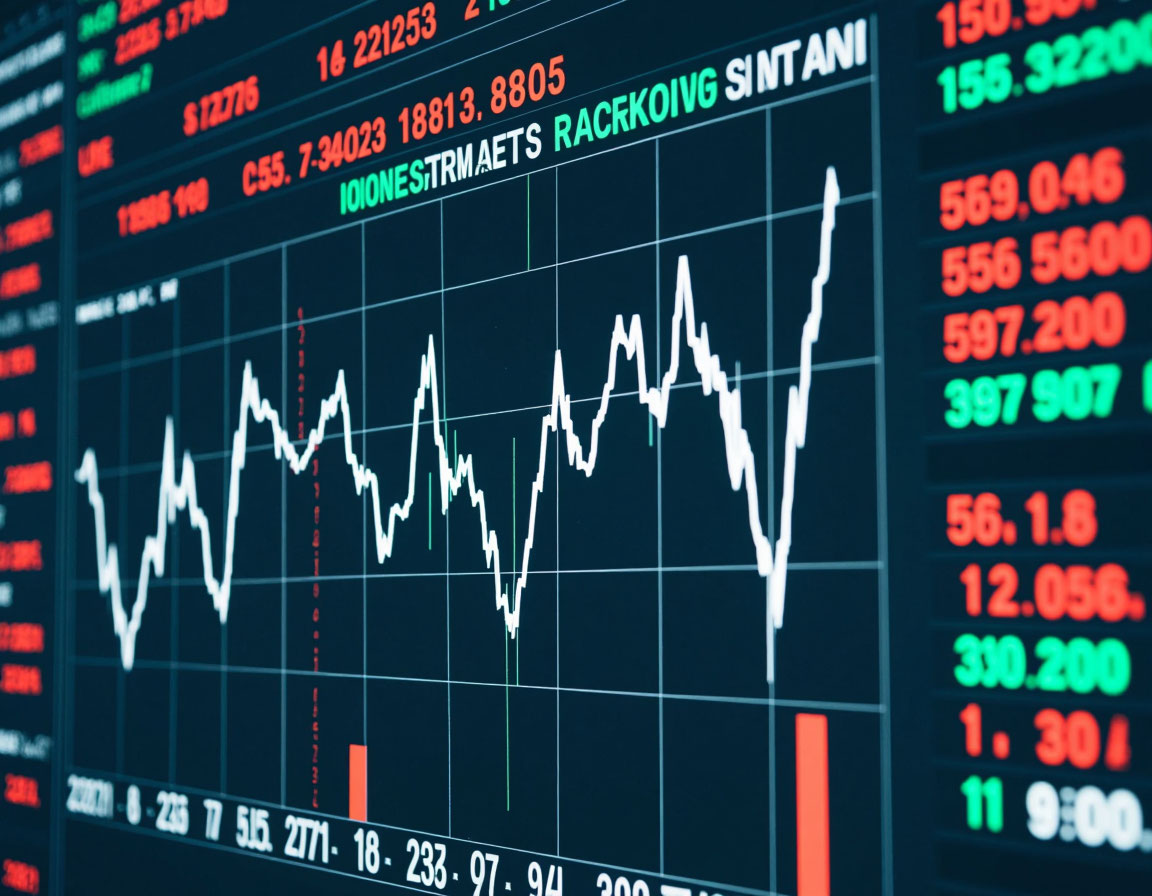
Order Book (or DOM) is a tool of the trading terminal that displays a queue of unexecuted limit orders for buying and selling.
The key function of the glass is to provide an understanding of market depth and the strength of buyers/sellers, which is critically important for making accurate trading decisions.
It consists of two parts: “bids” (buyers) with prices below the current market level and “asks” (sellers) with prices above. For each price, the total volume that the market is ready to buy or sell is indicated. This information helps traders assess the real liquidity situation: to see at which levels major players are concentrated and to predict short-term price movements. It is believed that the rapid “absorption” of large orders indicates a likely price increase in that direction.
The order book is an electronic table that displays current limit orders from buyers and sellers for a specific asset (stock, bond, currency pair, cryptocurrency, etc.) in the trading system. It represents a visualization of the order book, where market participants’ intentions are recorded in real-time. Although the terms “order book,” “quote book,” and “trading book” are often used interchangeably, there are subtle nuances between them that are important to understand for a deep analysis of the market situation.
What does the Order Book mean?
The term “Order Book” is the most general and widely used. It is the basic term that describes the visualization tool itself.
- Origin of the Name. The metaphor “book” (or “glass” in Russian, which translates to “order book” in this context) arose from the visual resemblance of the order table to a container where buy and sell orders are “poured.” The two columns—bid (buy) and ask (sell)—form its “walls,” and the difference in prices between the best orders creates its “bottom.”
- Fundamental Role. This tool is a direct reflection of current supply and demand in real time, showing not only the last trade but also the potential for future price movement.
- Data Structure. The information in it is updated at high speed, sometimes several times per second, reacting to the actions of market makers, retail investors, and algorithmic trading robots.
- Direct Market Access. The presence of this tool in a trading terminal indicates direct access to the exchange’s order book, which is characteristic of modern electronic trading platforms.
- Significance for the Trader. For a market participant, it is a “window” into the market’s pulse, allowing them to assess liquidity, volatility, and the psychology of other players.
What is Price Depth?
The term “Price Depth” emphasizes the price levels at which market participants are willing to transact. It highlights the price dimension of the order book.
- Focus on Price. In this context, the focus is on the specific values at which orders are queued. Each row in the table is a specific price level, not just an individual order.
- Market Depth. The concept of “market depth” is directly related to Price Depth, as it shows how far from the current price there are significant accumulations of orders that can act as support or resistance.
- Cluster Analysis. Analysts using this tool often look for large accumulations of orders (clusters) at certain price levels, which can slow down or reverse an asset’s movement.
- Price Levels. This term is more often used when a trader discusses strategies based on breaking through or bouncing off key levels displayed in the order book.
- Tactical Planning. When placing a limit order, a trader relies precisely on the Price Depth, choosing the optimal level for entry or exit.
What is Market Depth?
The expression “Market Depth” semantically shifts the focus from pure price levels to the process of quoting, i.e., the establishment of the current bid and ask prices.
- Emphasis on the Quote. A quote is not just a price, but a pair of values: the best bid price and the best ask price. Thus, Market Depth is an expanded version of a quote, showing not only the best prices but also the subsequent ones.
- The Spread. The first thing noticed in this view is the difference (spread) between the highest bid and the lowest ask. A narrow spread usually indicates high asset liquidity.
- Source of Quotes. Market makers and large participants form these very quotes with their orders, providing liquidity to others.
- Dynamics of Changes. The term implies a more dynamic perception of data: how quickly quotes change, how aggressive buyers or sellers are at different levels.
- Execution of Market Orders. When a trader places a market order, it is executed at the best prices indicated precisely in the Market Depth.
How do Price Depth and Market Depth differ?
Although both concepts describe the same object, the difference lies in the plane of emphasis and the practical application of these emphases.
- Semantic Nuance. “Price Depth” is a look at static levels, a map of prices. “Market Depth” is a look at the dynamic process of price formation in real time.
- Difference in Analysis. Analyzing the first, a trader might say: “Large sell volume at a price of 100 rubles.” Analyzing the second: “Quotes are actively shifting downward under seller pressure.”
- Professional Jargon. In the professional environment, especially among algorithmic traders, the term “Market Depth” is used more often, as their algorithms work precisely with the flow of changing quotes.
- For the Retail Investor. For the average investor, this distinction is often insignificant, and both names are perceived as synonyms for the same element of the trading terminal interface.
- Conclusion. It can be concluded that “Market Depth” is a narrower and more technical term, while “Price Depth” is more descriptive and general.
How to understand the Order Book?
For a beginner, a table with numbers may seem complicated, but its structure is quite logical and standard for most trading platforms.
- Basic Structure. The table is usually divided into two main parts: the left (or top) for buy orders (Bid), and the right (or bottom) for sell orders (Ask). Orders within each group are sorted: in bids—by descending price, in asks—by ascending price.
- Columns. As a rule, there are three key columns: “Price,” “Quantity” (volume in lots or units of the asset), and “Total” (total volume in monetary terms).
- Best Prices. The most important row is in the middle, where the best (highest) bid price and the best (lowest) ask price meet. This point is the center of the current market confrontation.
- Color Coding. In many terminals, buy orders are highlighted in green or blue, and sell orders in red. This allows for a quick visual assessment of the balance of power.
- First Steps. A novice market participant should first simply observe how the table changes at the moments of news releases or during sharp movements to develop an intuitive understanding.
How to analyze the Order Book?
Deep analysis of this tool allows one to identify non-obvious market signals and the intentions of large players.
- Liquidity Assessment. The first step is to look at the volumes at the best prices and several levels deeper. Large volumes mean high liquidity, allowing for trades with minimal slippage.
- Identifying Support and Resistance Levels. Large accumulations of buy orders below the current price form a support zone. Similarly, large sell volumes above form resistance.
- Finding Stop-Losses. Sometimes one can notice clusters of small orders far from the current price. These may be stop-losses of retail traders, which can attract large participants to “collect” them.
- Pressure Analysis. If at each level deeper into the buys the volumes are significantly larger than in the sells, this indicates buying pressure, and vice versa.
- Market Maker Activity. Large players often place and quickly remove large orders to create an illusion of support or resistance and provoke movement in the desired direction.
How to interpret the Order Book?
Interpretation goes beyond simple analysis of numbers and includes understanding the psychology and tactics of market participants.
- Crowd Psychology. A large volume of limit buy orders at a certain level indicates that many people consider that price attractive for entering a long position.
- The “Wall” Tactic. A large order significantly exceeding the volume of neighboring ones visually looks like a “wall.” A “wall” on the sell side can restrain growth, and its removal can lead to a sharp price spike.
- Trading the Spread. A narrow spread between the bid and ask is beneficial for day traders as it reduces transaction costs for frequent trades.
- Signals for Movement. The rapid “absorption” of large buy or sell orders by aggressive market orders is a sure sign of the start of a strong move.
- Limited Information. It is important to remember that only limit orders are displayed in the order book. It does not show market orders that are already queued for execution, nor the true intentions of institutional investors breaking large trades into parts.
What is displayed in the Order Book?
The content of the table represents aggregated data provided by the trading platform.
- Limit Orders. The core content consists of active limit orders, i.e., instructions to buy or sell an asset at a specified price or better.
- Price Levels and Volumes. For each price level, the cumulative volume of all orders at that price is displayed.
- Identifiers (less common). On some platforms, especially cryptocurrency exchanges, identifiers of large market makers may be displayed.
- Historical Data. Some advanced platforms allow you to see not only the current state but also the history of changes—which orders were placed and canceled.
- Derived Data. Based on raw data, the terminal can calculate and display additional parameters, such as the total volume of buys and sells up to a certain depth level.
How to use the Order Book?
The practical application of this tool is multifaceted and depends on the trading strategy.
- For Placing Limit Orders. This is its direct purpose. A trader can place their order in the queue, focusing on existing levels, to get a better execution price compared to a market order.
- For Determining Entry and Exit Points. By observing how the price reacts to key levels in the order book, one can make decisions about opening or closing a position.
- For Scalping. Scalpers use the slightest changes in quotes to make trades lasting seconds, playing on the narrowing and widening of the spread.
- For Risk Management. Seeing low liquidity (small volumes), a trader understands that their market order may be executed with significant slippage and adjusts their tactics accordingly.
- For Filtering Signals. A buy signal from a technical indicator can be strengthened if significant buying interest is observed in the Price Depth at that time, and weakened otherwise.
Order Book on traditional exchanges and in crypto
Despite the common essence, the implementation and features of using this tool on traditional exchanges and digital asset trading platforms have noticeable differences.
- Data Accessibility. On centralized traditional exchanges, order book data is standardized and provided to all participants through licensed providers. In the world of cryptocurrencies, each exchange has its own order book, and its depth and accuracy can vary.
- Regulation. In the stock market, the activities of market makers are strictly regulated, making the data more structured. On cryptocurrency platforms, the rules are often softer, which can lead to greater manipulative activity.
- Fragmentation. Due to the huge number of cryptocurrency exchanges and the lack of a single center, liquidity is fragmented. The same asset can have a completely different picture in the order book on different platforms.
- Transparency. Crypto exchanges typically provide non-aggregated data, showing each individual order, while traditional venues often aggregate them by price.
- Volatility. Due to lower liquidity for many pairs and 24/7 trading, order books in crypto can change at tremendous speed, and spreads can be significantly wider.
Where to view the Order Book?
Access to this tool is provided through specialized software.
- Trading Terminals. The main channel is professional trading platforms such as MetaTrader, Quik, Thinkorswim, ATAS, and others.
- Broker Applications. Many retail brokers include a simplified version of the order book in their mobile apps and web platforms for clients.
- Exchange Websites. The official websites of major exchanges (Moscow, SPb, NASDAQ) often provide access to basic quote and market depth information in the investor section.
- Specialized Services. There are paid and free online services and APIs that provide in-depth order book data for analysis and algorithmic trading.
- Crypto Exchanges. Virtually all major digital asset trading platforms (Binance, Bybit, OKX) display the order book directly in their interface.
How to trade using the Order Book?
Strategies based on directly reading the order book require experience and quick reaction.
- Trading with Liquidity. The strategy involves placing limit orders near large “walls,” expecting their breakout. After the “wall” is removed and the price moves, the trader takes profit.
- Trading Against the “Wall”. If a “wall” on the sell side does not decrease as the price rises, it may be a fake order. A trader might open a long position, expecting its removal and subsequent growth.
- Scalping the Spread Change. The trader catches moments of narrowing spread between the best bid and ask, quickly opening and closing a position.
- Order Positioning. To minimize slippage in large trades, orders are placed not at the market price, but deeper in the order book, waiting for their turn to be filled.
- Using Cluster Analysis. Analyzing not just volumes, but their distribution at specific prices (delta) allows for more accurate identification of reversal and acceleration points.
Conclusion
The Order Book, be it Price Depth or Market Depth, is not just a table of numbers, but a powerful analytical tool that provides a unique window into the market’s microstructure. It allows moving from analyzing the past (charts) to assessing the current balance of power and forecasting the immediate future.
Tool Evolution. With the development of technology and artificial intelligence, methods for analyzing the order book continue to become more complex, but its basic purpose—to display supply and demand—remains unchanged.
A Key Skill. The ability to read and interpret its data is one of the key skills for a modern trader, especially those engaged in short-term and intraday strategies.
Not the Absolute Truth. However, one should not rely on it as the only source of truth. High-frequency trading and the tactics of large players can create false signals.
A Comprehensive Approach. Maximum effectiveness is achieved by using order book data in conjunction with technical and fundamental analysis, as well as information about the market context.